✓ Tested in Faten's kitchen
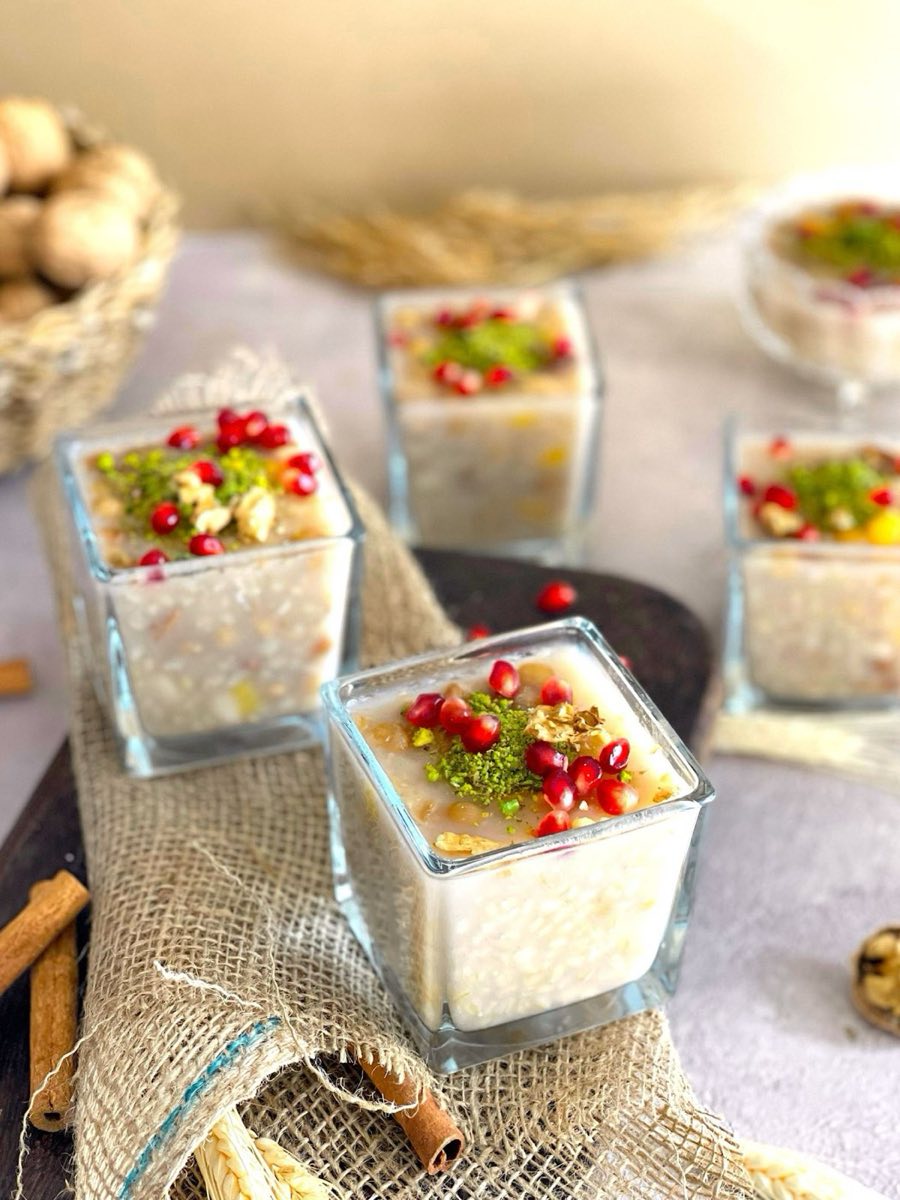
A communal winter pudding of wheat berries, chickpeas, white beans, and dried fruit simmered for hours until the grains swell and the liquid thickens to a starchy, fragrant cream — then finished with rose water, pomegranate, and crushed nuts. Made in large quantities and shared with neighbors.
Also known as ashure idlibi
⏱ 120 min🍽 12 servings📍 Idlib
Cook this hands-free
Every Sofra recipe is free to read here on the web. In the app, 112 recipes are free to cook in full, and membership opens the rest. The optional supporter upgrade unlocks the audio experience — step-by-step English narration (text-to-speech) — plus hands-free Cooking Mode and Charbel Rouhana's original oud music.
Get Sofra on Google Play →
Free download. Zero third-party ads. Ever.
The story
Ashure is called "Noah's pudding" across the Middle East because of a legend that Noah combined the last provisions on the Ark into one pot when the flood receded — the dish represents abundance from scarcity. In Idlib, ashure is made on the tenth day of Muharram (the first Islamic month) and distributed to neighbors, the poor, and passersby — it is explicitly a communal dish, made in a large pot that no one household could finish alone. The Idlib version is distinguished from the Turkish version (which is heavily sweetened and uses more fruit) and from the Lebanese version by its use of pomegranate as a primary garnish, the inclusion of anise in the cooking liquid, and its less sweet, more savory-grain character. Ashure in Idlib functions as an act of remembrance and community solidarity — the act of distribution is more significant than the eating.
Frequently asked questions
What is Idlib Noah's Pudding?
A communal winter pudding of wheat berries, chickpeas, white beans, and dried fruit simmered for hours until the grains swell and the liquid thickens to a starchy, fragrant cream — then finished with rose water, pomegranate, and crushed nuts. Made in large quantities and shared with neighbors.
Where is Idlib Noah's Pudding from?
Idlib Noah's Pudding comes from Idlib. Sofra documents this recipe as part of its 214-recipe Lebanese and Syrian heritage collection, including 49 dishes from Idlib province.
Is Idlib Noah's Pudding vegetarian or vegan?
As written, Idlib Noah's Pudding uses only plant-based ingredients, so it is suitable for both vegetarian and vegan diets. Always double-check the full ingredient list against your own dietary needs.
What can I use instead of whole anise seeds in Idlib Noah's Pudding?
The whole anise seeds called for here is part of the traditional recipe and gives Idlib Noah's Pudding its traditional character, so keep it if you can. If you must substitute, choose the closest equivalent you have on hand and adjust to taste — the dish will shift slightly from the traditional version but still work. The Sofra app lists the full ingredient set and sourcing notes.
What do I serve with Idlib Noah's Pudding?
In a Levantine desserts spread, Idlib Noah's Pudding is served at the end of a meal or with afternoon coffee or tea. A little extra syrup or nuts on top is traditional where the recipe calls for them.
Can I make Idlib Noah's Pudding ahead, and how do I store leftovers?
Most components can be prepared ahead. Store leftovers covered in the refrigerator and bring to room temperature before serving for the best texture; syrups and nut toppings are best added or refreshed close to serving.
Hear every step read aloud
Step-by-step audio narration (text-to-speech) guides you hands-free. Charbel Rouhana's original oud plays during Cooking Mode.
Get Sofra on Google Play →