✓ Tested in Faten's kitchen
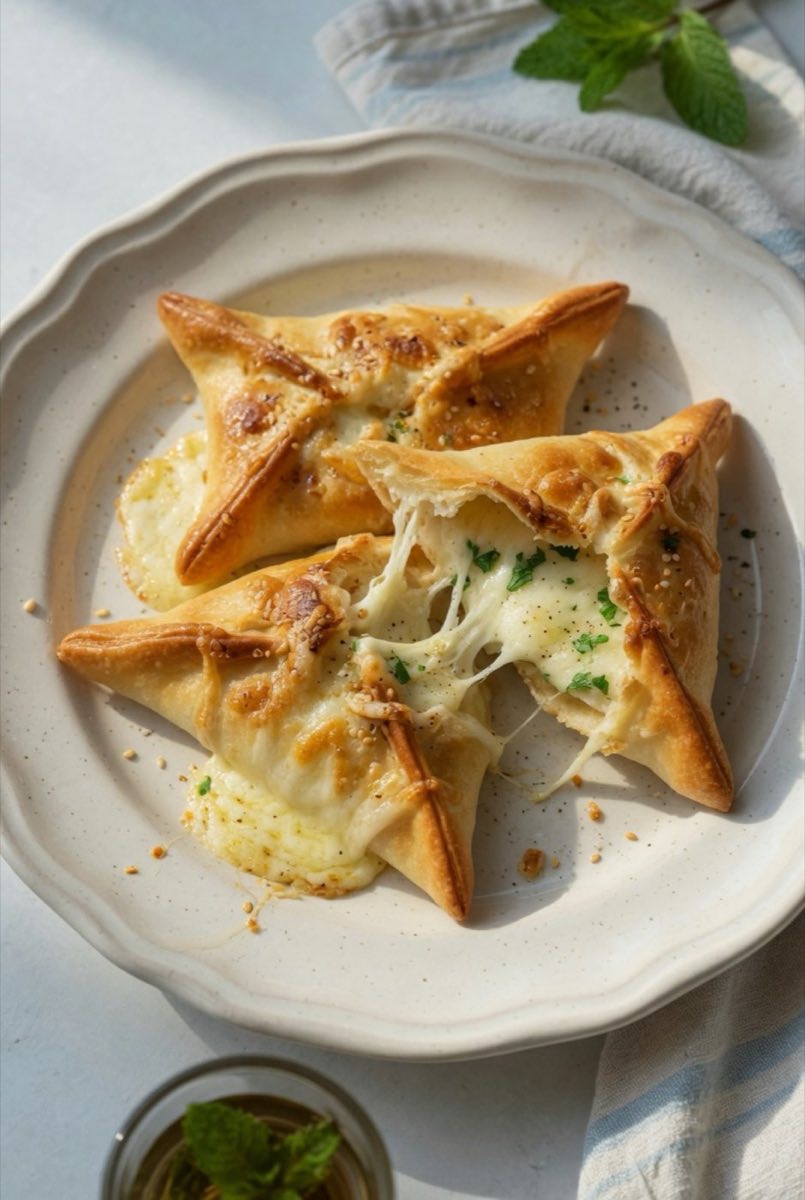
Open-faced pastry boats with a salty, melted cheese filling fragrant with nigella seeds and a hint of dried mint — pillowy dough that cradles rather than encloses its filling.
⏱ 108 min🍽 12 servings📍 Mount Lebanon
Cook this hands-free
Every Sofra recipe is free to read here on the web. In the app, 112 recipes are free to cook in full, and membership opens the rest. The optional supporter upgrade unlocks the audio experience — step-by-step English narration (text-to-speech) — plus hands-free Cooking Mode and Charbel Rouhana's original oud music.
Get Sofra on Google Play →
Free download. Zero third-party ads. Ever.
The story
The open-face shape of cheese fatayer — a boat or oval rather than a sealed triangle — distinguishes it from the spinach version and allows the cheese to brown beautifully in the oven. In Lebanese mountain villages, these were breakfast food, pulled from communal ovens at dawn. The Ivory Coast Lebanese diaspora (one of West Africa's largest) serves cheese fatayer at church breakfasts, using local soft cheese when Akkawi is unavailable, seamlessly blending Lebanese tradition into Abidjan neighborhood life.
Frequently asked questions
What is Cheese Fatayer?
Open-faced pastry boats with a salty, melted cheese filling fragrant with nigella seeds and a hint of dried mint — pillowy dough that cradles rather than encloses its filling.
Where is Cheese Fatayer from?
Cheese Fatayer comes from Mount Lebanon. Sofra documents this recipe as part of its 214-recipe Lebanese and Syrian heritage collection, including 49 dishes from Idlib province.
Is Cheese Fatayer vegetarian?
As written, Cheese Fatayer contains no meat or fish, so it is suitable for vegetarians. It does include dairy or other animal-derived ingredients, so it is not vegan. Check the full ingredient list against your own dietary needs.
What can I use instead of nigella seeds (habbat al-baraka) in Cheese Fatayer?
The nigella seeds (habbat al-baraka) called for here is part of the traditional recipe and gives Cheese Fatayer its traditional character, so keep it if you can. If you must substitute, choose the closest equivalent you have on hand and adjust to taste — the dish will shift slightly from the traditional version but still work. The Sofra app lists the full ingredient set and sourcing notes.
What do I serve with Cheese Fatayer?
In a Levantine breads spread, Cheese Fatayer is served warm — with dips like hummus, labneh, or za'atar and olive oil, or alongside any main dish.
Can I make Cheese Fatayer ahead, and how do I store leftovers?
Breads are best fresh and warm. If you make this ahead, let it cool completely, store it in an airtight bag or container, and gently rewarm before serving. Many flatbreads also freeze well.
Hear every step read aloud
Step-by-step audio narration (text-to-speech) guides you hands-free. Charbel Rouhana's original oud plays during Cooking Mode.
Get Sofra on Google Play →