✓ Tested in Faten's kitchen
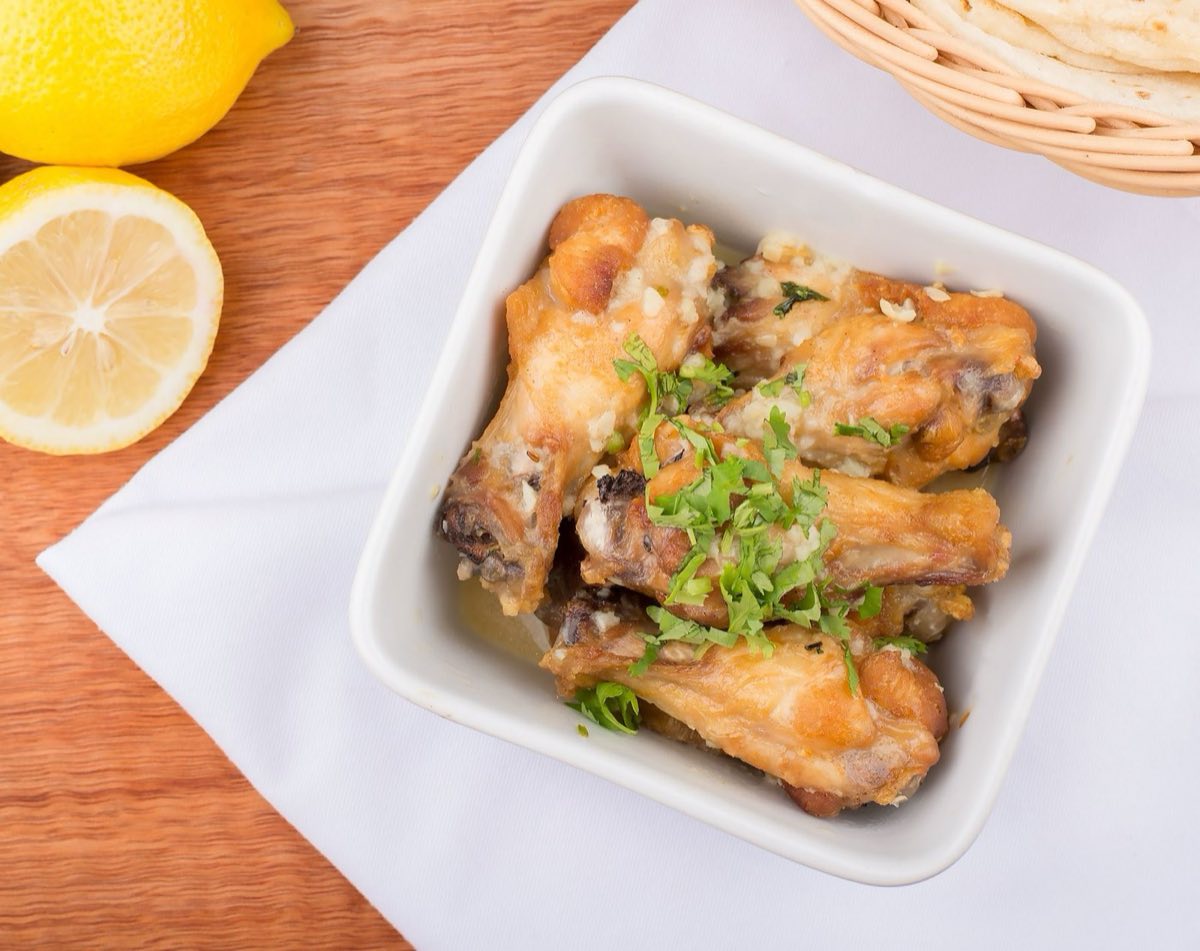
Bone-in chicken pieces braised low and slow with preserved lemon, garlic, green olives, and white wine until the sauce reduces to an intensely fragrant, glossy pan juice. A coastal Lebanese dish with unmistakable Mediterranean character.
⏱ 75 min🍽 4 servings📍 Lebanese coast
Cook this hands-free
Every Sofra recipe is free to read here on the web. In the app, 112 recipes are free to cook in full, and membership opens the rest. The optional supporter upgrade unlocks the audio experience — step-by-step English narration (text-to-speech) — plus hands-free Cooking Mode and Charbel Rouhana's original oud music.
Get Sofra on Google Play →
Free download. Zero third-party ads. Ever.
The story
Preserved lemon (hamod el-khal'a) is a pantry staple of Lebanese coastal cooking, used to add a concentrated, fermented citrus note to braises, salads, and dips. This chicken dish is particularly common in the coastal port cities of Tripoli and Byblos, where trade routes brought North African preserved lemon techniques centuries ago. Lebanese-French communities in Marseille — which has hosted Lebanese immigrants since the 1860s — consider this dish almost Provençal in character, a natural bridge between the two cuisines.
Frequently asked questions
What is Djaj bil Limoun?
Bone-in chicken pieces braised low and slow with preserved lemon, garlic, green olives, and white wine until the sauce reduces to an intensely fragrant, glossy pan juice. A coastal Lebanese dish with unmistakable Mediterranean character.
Where is Djaj bil Limoun from?
Djaj bil Limoun comes from Lebanese coast. Sofra documents this recipe as part of its 214-recipe Lebanese and Syrian heritage collection, including 49 dishes from Idlib province.
Is Djaj bil Limoun vegetarian?
No — as written, Djaj bil Limoun includes meat, fish, or meat-based stock, so it is not vegetarian. See the ingredient list for the specific ingredients used.
What can I use instead of seven spice in Djaj bil Limoun?
The seven spice called for here is part of the traditional recipe and gives Djaj bil Limoun its traditional character, so keep it if you can. If you must substitute, choose the closest equivalent you have on hand and adjust to taste — the dish will shift slightly from the traditional version but still work. The Sofra app lists the full ingredient set and sourcing notes.
What do I serve with Djaj bil Limoun?
In a Levantine mains spread, Djaj bil Limoun is typically served with rice or warm flatbread, a simple salad such as fattoush or tabbouleh, and pickles or yogurt on the side.
Can I make Djaj bil Limoun ahead, and how do I store leftovers?
Yes — leftovers keep well stored in an airtight container in the refrigerator for a few days. Reheat gently (or bring to room temperature for cold dishes) and taste to adjust seasoning before serving. Dishes with fresh herbs or dressing are freshest the day they are made.
Hear every step read aloud
Step-by-step audio narration (text-to-speech) guides you hands-free. Charbel Rouhana's original oud plays during Cooking Mode.
Get Sofra on Google Play →