✓ Tested in Faten's kitchen
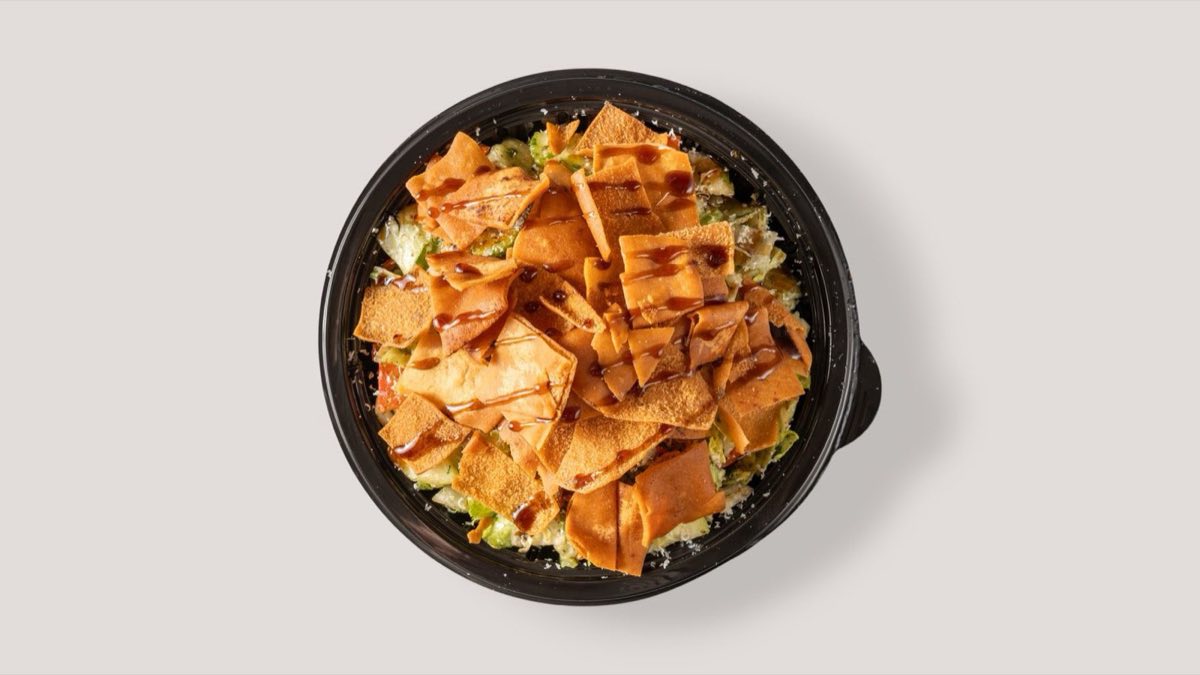
A Levantine bread salad elevated by Idlib's grassy first-press olive oil and a generous hand with sumac — crisp toasted flatbread shards, ripe summer vegetables, and an aggressively tart dressing that tastes like a Lebanese summer afternoon.
⏱ 30 min🍽 4 servings📍 Idlib
Cook this hands-free
Every Sofra recipe is free to read here on the web. In the app, 112 recipes are free to cook in full, and membership opens the rest. The optional supporter upgrade unlocks the audio experience — step-by-step English narration (text-to-speech) — plus hands-free Cooking Mode and Charbel Rouhana's original oud music.
Get Sofra on Google Play →
Free download. Zero third-party ads. Ever.
The story
Fattoush appears across the Levant, but Faten's Idlibi version has several distinctive marks: the dressing uses pomegranate molasses in place of or alongside lemon, the sumac quantity is almost doubled compared to the Lebanese coastal version, and the olive oil is always the local Idlib oil — cold-pressed from trees whose roots go back centuries. In the Idlib countryside, fattoush is a year-round salad, not a summer-only one, because dried herbs and stored pomegranate molasses keep the flavor profile intact even in winter. The flatbread is always toasted until fully crisp in a dry pan, never deep-fried — a technique Faten insists upon because fried bread goes soggy within minutes, while pan-toasted bread stays crunchy through the entire meal.
Frequently asked questions
What is Faten's Idlibi Fattoush?
A Levantine bread salad elevated by Idlib's grassy first-press olive oil and a generous hand with sumac — crisp toasted flatbread shards, ripe summer vegetables, and an aggressively tart dressing that tastes like a Lebanese summer afternoon.
Where is Faten's Idlibi Fattoush from?
Faten's Idlibi Fattoush comes from Idlib. Sofra documents this recipe as part of its 214-recipe Lebanese and Syrian heritage collection, including 49 dishes from Idlib province.
Is Faten's Idlibi Fattoush vegetarian or vegan?
As written, Faten's Idlibi Fattoush uses only plant-based ingredients, so it is suitable for both vegetarian and vegan diets. Always double-check the full ingredient list against your own dietary needs.
What can I use instead of sumac in Faten's Idlibi Fattoush?
The sumac called for here is part of the traditional recipe and gives Faten's Idlibi Fattoush its traditional character, so keep it if you can. If you must substitute, choose the closest equivalent you have on hand and adjust to taste — the dish will shift slightly from the traditional version but still work. The Sofra app lists the full ingredient set and sourcing notes.
What do I serve with Faten's Idlibi Fattoush?
In a Levantine salads spread, Faten's Idlibi Fattoush is served as a fresh side to grilled meats, roasted vegetables, or a mezze spread, and pairs well with warm bread.
Can I make Faten's Idlibi Fattoush ahead, and how do I store leftovers?
Yes — leftovers keep well stored in an airtight container in the refrigerator for a few days. Reheat gently (or bring to room temperature for cold dishes) and taste to adjust seasoning before serving. Dishes with fresh herbs or dressing are freshest the day they are made.
Hear every step read aloud
Step-by-step audio narration (text-to-speech) guides you hands-free. Charbel Rouhana's original oud plays during Cooking Mode.
Get Sofra on Google Play →