✓ Tested in Faten's kitchen
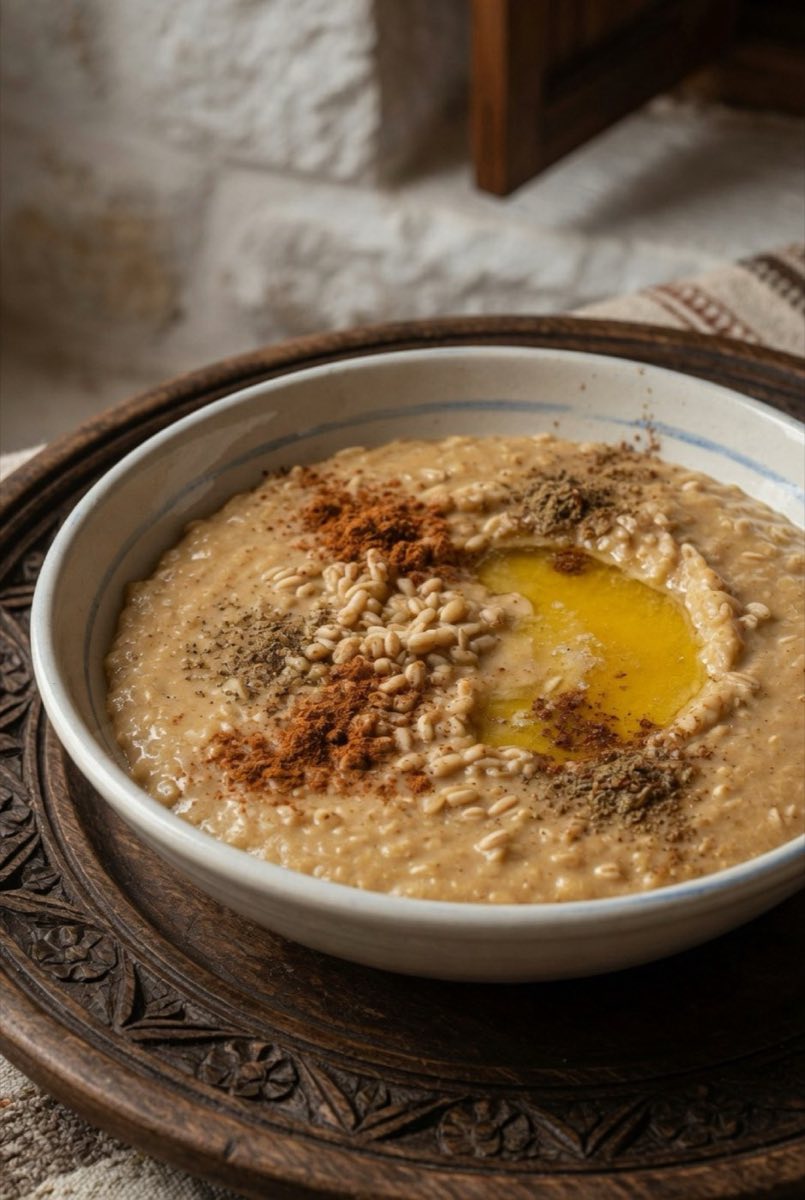
Whole wheat berries and lamb shoulder cooked for hours until they dissolve into a thick, silky porridge — the great communal dish of Lebanese mountain winters, ladled into deep bowls and topped with a river of clarified butter.
⏱ 210 min🍽 8 servings📍 Mount Lebanon
Cook this hands-free
Every Sofra recipe is free to read here on the web. In the app, 112 recipes are free to cook in full, and membership opens the rest. The optional supporter upgrade unlocks the audio experience — step-by-step English narration (text-to-speech) — plus hands-free Cooking Mode and Charbel Rouhana's original oud music.
Get Sofra on Google Play →
Free download. Zero third-party ads. Ever.
The story
Harissa is the dish Lebanese mountain villages make for weddings, funerals, and the major religious feasts of both Christians and Muslims. The word means "mashed" in Arabic, and the technique is old enough to appear in Ottoman-era cookbooks. In the Shouf, the Metn, and the Kisrawan, large copper pots of harissa were the centerpiece of village gatherings — cooked communally over open fires while the men beat the mixture with long wooden paddles. The result is a single dish that gives full credit to the Lebanese belief that the simplest ingredients, treated with patience and time, produce the deepest flavors. Lebanese Heritage Kitchen families in Sao Paulo cook harissa for Brazilian guests who inevitably ask why the "porridge" tastes richer than anything they have eaten.
Frequently asked questions
What is Harissa — Lebanese Wheat and Lamb Porridge?
Whole wheat berries and lamb shoulder cooked for hours until they dissolve into a thick, silky porridge — the great communal dish of Lebanese mountain winters, ladled into deep bowls and topped with a river of clarified butter.
Where is Harissa — Lebanese Wheat and Lamb Porridge from?
Harissa — Lebanese Wheat and Lamb Porridge comes from Mount Lebanon. Sofra documents this recipe as part of its 214-recipe Lebanese and Syrian heritage collection, including 49 dishes from Idlib province.
Is Harissa — Lebanese Wheat and Lamb Porridge vegetarian?
No — as written, Harissa — Lebanese Wheat and Lamb Porridge includes meat, fish, or meat-based stock, so it is not vegetarian. See the ingredient list for the specific ingredients used.
What can I use instead of cinnamon stick in Harissa — Lebanese Wheat and Lamb Porridge?
The cinnamon stick called for here is part of the traditional recipe and gives Harissa — Lebanese Wheat and Lamb Porridge its traditional character, so keep it if you can. If you must substitute, choose the closest equivalent you have on hand and adjust to taste — the dish will shift slightly from the traditional version but still work. The Sofra app lists the full ingredient set and sourcing notes.
What do I serve with Harissa — Lebanese Wheat and Lamb Porridge?
In a Levantine mains spread, Harissa — Lebanese Wheat and Lamb Porridge is typically served with rice or warm flatbread, a simple salad such as fattoush or tabbouleh, and pickles or yogurt on the side.
Can I make Harissa — Lebanese Wheat and Lamb Porridge ahead, and how do I store leftovers?
Yes — leftovers keep well stored in an airtight container in the refrigerator for a few days. Reheat gently (or bring to room temperature for cold dishes) and taste to adjust seasoning before serving. Dishes with fresh herbs or dressing are freshest the day they are made.
Hear every step read aloud
Step-by-step audio narration (text-to-speech) guides you hands-free. Charbel Rouhana's original oud plays during Cooking Mode.
Get Sofra on Google Play →