✓ Tested in Faten's kitchen
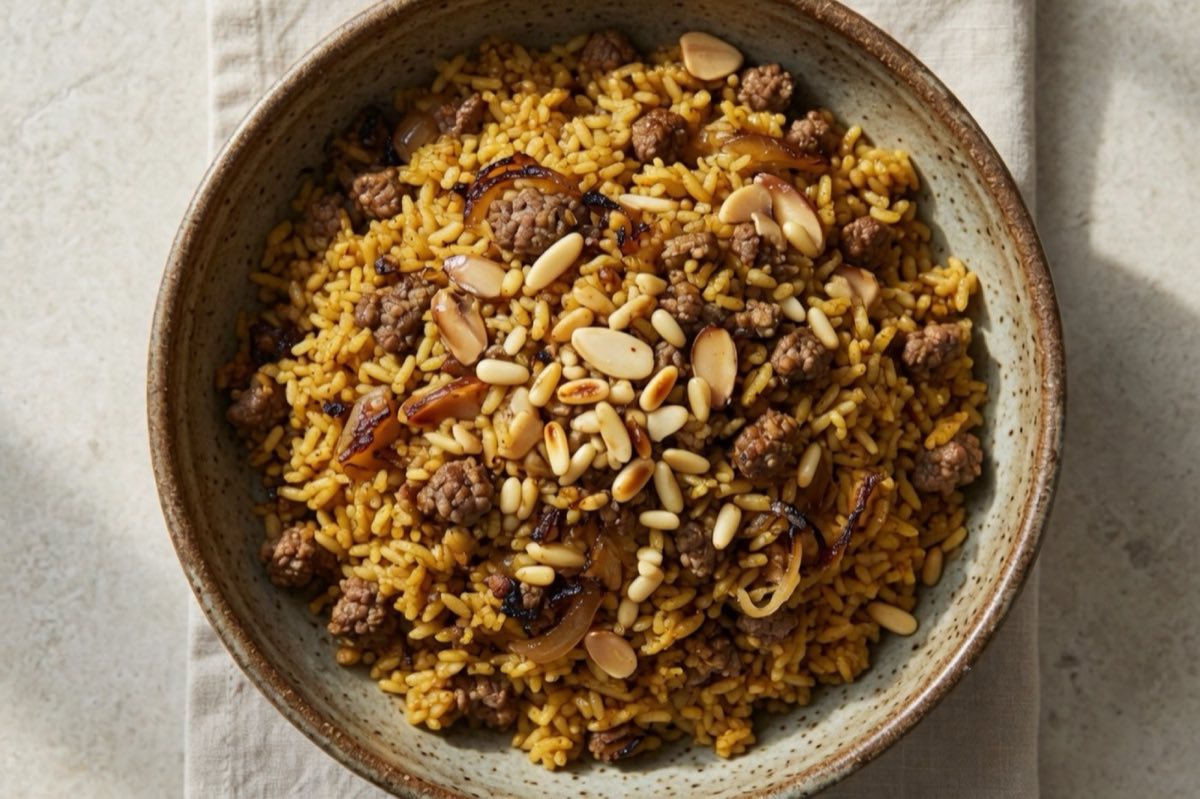
Golden spiced rice cooked with ground lamb, caramelized onion, toasted pine nuts and almonds — the aromatic, jewel-studded filling-turned-main-dish that anchors countless Lebanese celebrations.
⏱ 50 min🍽 5 servings📍 Mount Lebanon
Cook this hands-free
Every Sofra recipe is free to read here on the web. In the app, 112 recipes are free to cook in full, and membership opens the rest. The optional supporter upgrade unlocks the audio experience — step-by-step English narration (text-to-speech) — plus hands-free Cooking Mode and Charbel Rouhana's original oud music.
Get Sofra on Google Play →
Free download. Zero third-party ads. Ever.
The story
Hashweh means "stuffing" in Arabic, and this dish began its life as the filling for kibbeh, stuffed vegetables, and lamb for festive occasions. But hashweh is so good that it became a meal in its own right. Lebanese mountain families serve hashweh piled high at the center of the holiday table, surrounded by yogurt and pickles. Lebanese-American communities in Detroit and Houston serve hashweh as the mandatory stuffing for Thanksgiving turkey — the dish that makes the Thanksgiving table Lebanese.
Frequently asked questions
What is Hashweh?
Golden spiced rice cooked with ground lamb, caramelized onion, toasted pine nuts and almonds — the aromatic, jewel-studded filling-turned-main-dish that anchors countless Lebanese celebrations.
Where is Hashweh from?
Hashweh comes from Mount Lebanon. Sofra documents this recipe as part of its 214-recipe Lebanese and Syrian heritage collection, including 49 dishes from Idlib province.
Is Hashweh vegetarian?
No — as written, Hashweh includes meat, fish, or meat-based stock, so it is not vegetarian. See the ingredient list for the specific ingredients used.
What can I use instead of seven spice in Hashweh?
The seven spice called for here is part of the traditional recipe and gives Hashweh its traditional character, so keep it if you can. If you must substitute, choose the closest equivalent you have on hand and adjust to taste — the dish will shift slightly from the traditional version but still work. The Sofra app lists the full ingredient set and sourcing notes.
What do I serve with Hashweh?
In a Levantine mains spread, Hashweh is typically served with rice or warm flatbread, a simple salad such as fattoush or tabbouleh, and pickles or yogurt on the side.
Can I make Hashweh ahead, and how do I store leftovers?
Yes — leftovers keep well stored in an airtight container in the refrigerator for a few days. Reheat gently (or bring to room temperature for cold dishes) and taste to adjust seasoning before serving. Dishes with fresh herbs or dressing are freshest the day they are made.
Hear every step read aloud
Step-by-step audio narration (text-to-speech) guides you hands-free. Charbel Rouhana's original oud plays during Cooking Mode.
Get Sofra on Google Play →