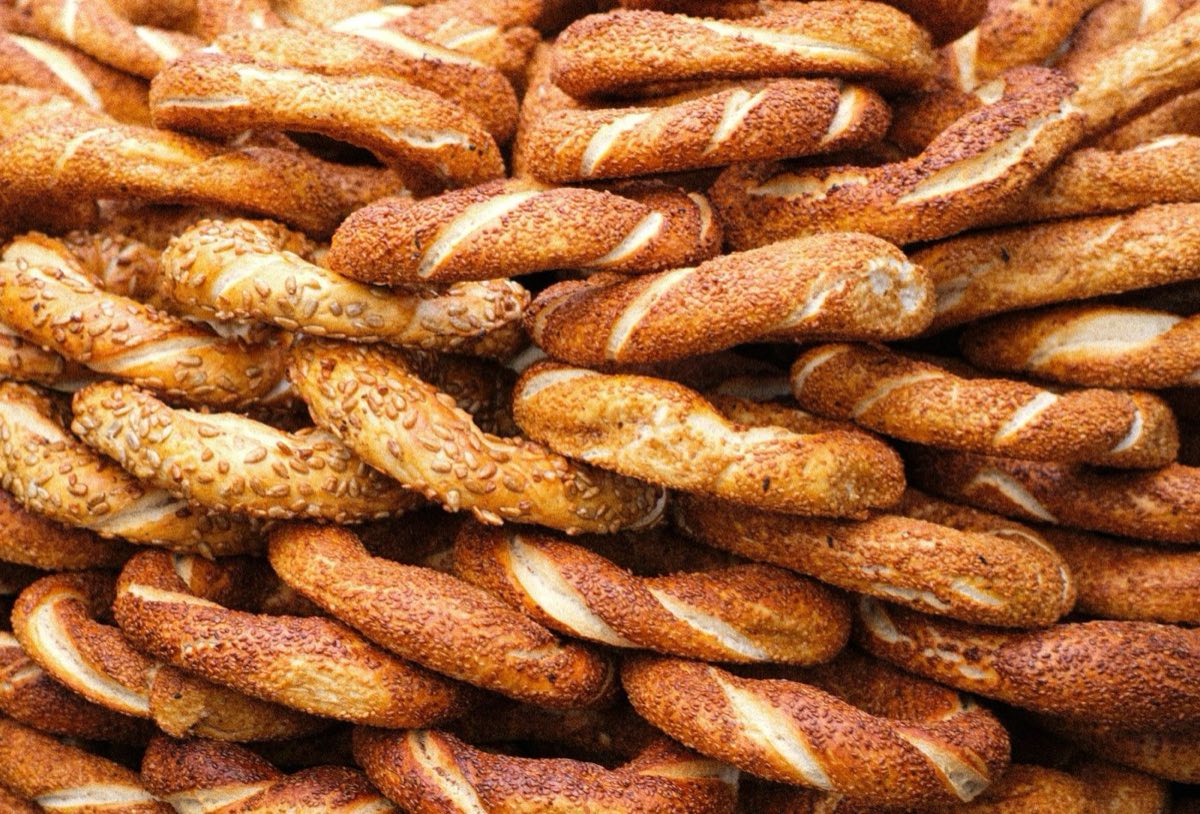
✓ Tested in Faten's kitchen
Dense, crusty round loaves leavened with just a touch of yeast and baked directly on the oven floor — the ancient daily bread of the Lebanese mountain villages, with a chewy, nutty crumb that absorbs olive oil and labneh better than any other bread.
⏱ 115 min🍽 8 servings📍 Mount Lebanon
Cook this hands-free
Every Sofra recipe is free to read here on the web. In the app, 112 recipes are free to cook in full, and membership opens the rest. The optional supporter upgrade unlocks the audio experience — step-by-step English narration (text-to-speech) — plus hands-free Cooking Mode and Charbel Rouhana's original oud music.
Get Sofra on Google Play →
Free download. Zero third-party ads. Ever.
The story
Kaak baladiyeh (literally "town bread" or "traditional bread") is the rough-hewn cousin of the thin flatbreads that dominate modern Lebanese baking. In the mountain villages of Bsharri, Tannourine, and the Shouf, this thick, round loaf was baked in the communal taboun (clay bread oven) every three or four days by families who kept their own grain and ground it locally. The bread is made from only four ingredients — flour, water, yeast, and salt — in proportions that have not changed in centuries. Its dense, tight crumb and thick crust make it ideal for mountain life: it travels without crumbling, stays fresh for days (and is excellent toasted after four days), and absorbs olive oil in the way that thin pita never can. In the mountain breakfast tradition, kaak baladiyeh is torn into chunks, drizzled with the family's own-press olive oil and za'atar, and eaten with labneh and olives. It is the bread of subsistence, of mountain winters when roads were impassable, of the pantry stocked for a week rather than bought fresh every morning. Lebanese Heritage Kitchen associates this bread with the smell of smoke and olive wood from the mountain kitchen, and with the specific weight of a fresh round in two hands — dense and warm and slightly sour from the long fermentation.
Frequently asked questions
What is Kaak Baladiyeh — Mountain Village Bread?
Dense, crusty round loaves leavened with just a touch of yeast and baked directly on the oven floor — the ancient daily bread of the Lebanese mountain villages, with a chewy, nutty crumb that absorbs olive oil and labneh better than any other bread.
Where is Kaak Baladiyeh — Mountain Village Bread from?
Kaak Baladiyeh — Mountain Village Bread comes from Mount Lebanon. Sofra documents this recipe as part of its 214-recipe Lebanese and Syrian heritage collection, including 49 dishes from Idlib province.
Is Kaak Baladiyeh — Mountain Village Bread vegetarian or vegan?
As written, Kaak Baladiyeh — Mountain Village Bread uses only plant-based ingredients, so it is suitable for both vegetarian and vegan diets. Always double-check the full ingredient list against your own dietary needs.
What can I use instead of bread flour or strong all-purpose flour in Kaak Baladiyeh — Mountain Village Bread?
The bread flour or strong all-purpose flour called for here is part of the traditional recipe and gives Kaak Baladiyeh — Mountain Village Bread its traditional character, so keep it if you can. If you must substitute, choose the closest equivalent you have on hand and adjust to taste — the dish will shift slightly from the traditional version but still work. The Sofra app lists the full ingredient set and sourcing notes.
What do I serve with Kaak Baladiyeh — Mountain Village Bread?
In a Levantine breads spread, Kaak Baladiyeh — Mountain Village Bread is served warm — with dips like hummus, labneh, or za'atar and olive oil, or alongside any main dish.
Can I make Kaak Baladiyeh — Mountain Village Bread ahead, and how do I store leftovers?
Breads are best fresh and warm. If you make this ahead, let it cool completely, store it in an airtight bag or container, and gently rewarm before serving. Many flatbreads also freeze well.
Hear every step read aloud
Step-by-step audio narration (text-to-speech) guides you hands-free. Charbel Rouhana's original oud plays during Cooking Mode.
Get Sofra on Google Play →