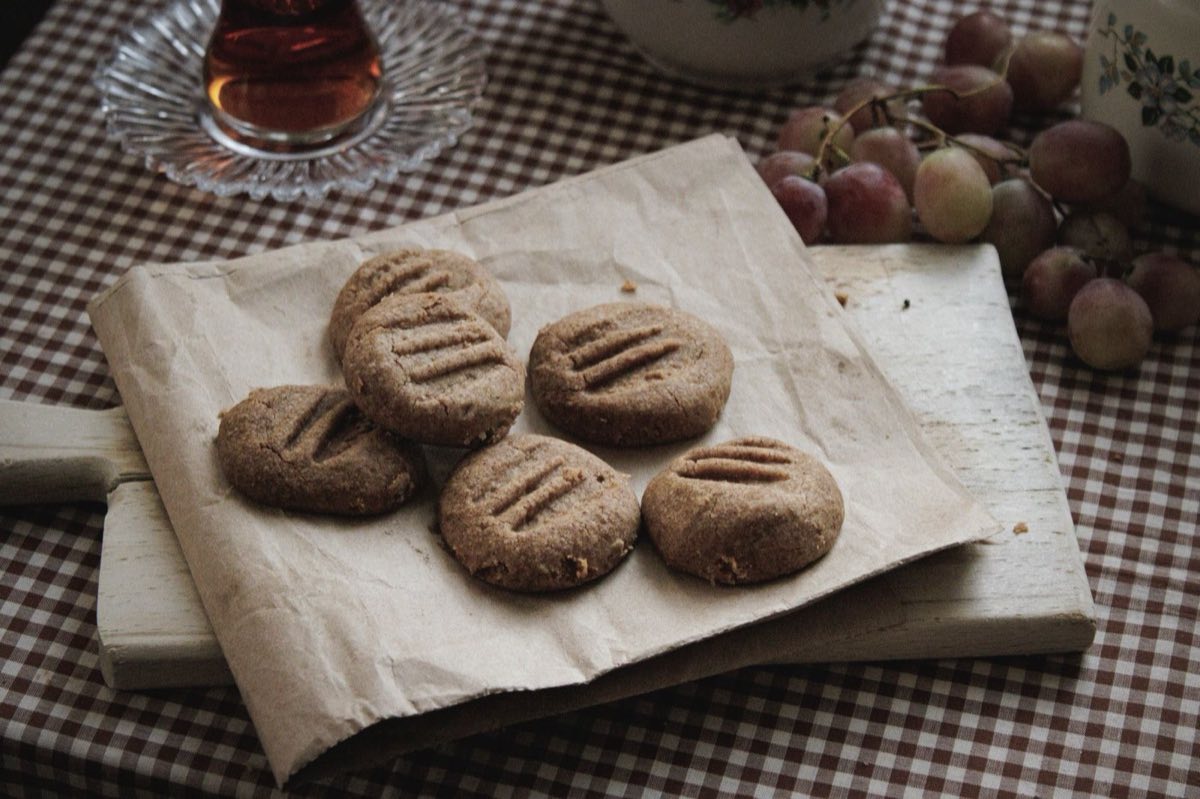
✓ Tested in Faten's kitchen
Dense ring-shaped cookies sweetened with dibs al-3anab — grape molasses — from the Bekaa harvest season. Earthy, deeply fruited, faintly caramelized, with a crumbly semolina texture and a scent of anise.
⏱ 55 min🍽 24 servings📍 Bekaa Valley
Cook this hands-free
Every Sofra recipe is free to read here on the web. In the app, 112 recipes are free to cook in full, and membership opens the rest. The optional supporter upgrade unlocks the audio experience — step-by-step English narration (text-to-speech) — plus hands-free Cooking Mode and Charbel Rouhana's original oud music.
Get Sofra on Google Play →
Free download. Zero third-party ads. Ever.
The story
The Bekaa Valley produces nearly all of Lebanon's wine grapes, and at harvest time — September through October — every village makes grape molasses (dibs al-3anab) from the overflow and unripe fruit. These cookies are the harvest season treat, made when the new molasses is fresh and dark. The grape molasses gives a flavor completely unlike sugar: tangy, complex, mineral, with a depth that no refined sweetener can replicate. In years when the harvest is excellent, Bekaa families make double batches and send them in tins to relatives in Beirut and Tripoli.
Frequently asked questions
What is Ka'ak bil 3anab?
Dense ring-shaped cookies sweetened with dibs al-3anab — grape molasses — from the Bekaa harvest season. Earthy, deeply fruited, faintly caramelized, with a crumbly semolina texture and a scent of anise.
Where is Ka'ak bil 3anab from?
Ka'ak bil 3anab comes from Bekaa Valley. Sofra documents this recipe as part of its 214-recipe Lebanese and Syrian heritage collection, including 49 dishes from Idlib province.
Is Ka'ak bil 3anab vegetarian or vegan?
As written, Ka'ak bil 3anab uses only plant-based ingredients, so it is suitable for both vegetarian and vegan diets. Always double-check the full ingredient list against your own dietary needs.
What can I use instead of ground anise in Ka'ak bil 3anab?
The ground anise called for here is part of the traditional recipe and gives Ka'ak bil 3anab its traditional character, so keep it if you can. If you must substitute, choose the closest equivalent you have on hand and adjust to taste — the dish will shift slightly from the traditional version but still work. The Sofra app lists the full ingredient set and sourcing notes.
What do I serve with Ka'ak bil 3anab?
In a Levantine desserts spread, Ka'ak bil 3anab is served at the end of a meal or with afternoon coffee or tea. A little extra syrup or nuts on top is traditional where the recipe calls for them.
Can I make Ka'ak bil 3anab ahead, and how do I store leftovers?
Most components can be prepared ahead. Store leftovers covered in the refrigerator and bring to room temperature before serving for the best texture; syrups and nut toppings are best added or refreshed close to serving.
Hear every step read aloud
Step-by-step audio narration (text-to-speech) guides you hands-free. Charbel Rouhana's original oud plays during Cooking Mode.
Get Sofra on Google Play →