✓ Tested in Faten's kitchen
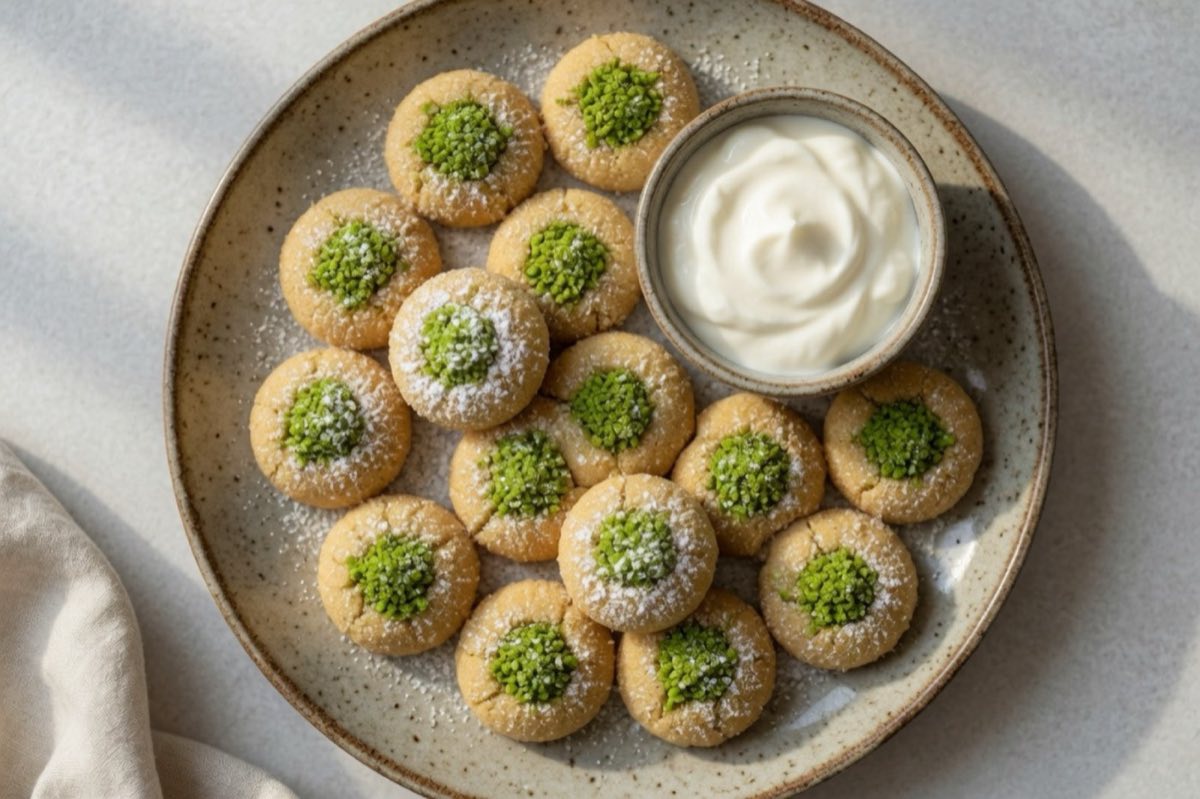
Small semolina cookies filled with a sweet pistachio paste, served alongside natef — a white, marshmallow-like cream made from beaten soapwort root extract. The cookies are dipped into the natef at the table. One of the oldest and most technically demanding desserts in the Lebanese repertoire.
⏱ 140 min🍽 30 servings📍 Mount Lebanon
Cook this hands-free
Every Sofra recipe is free to read here on the web. In the app, 112 recipes are free to cook in full, and membership opens the rest. The optional supporter upgrade unlocks the audio experience — step-by-step English narration (text-to-speech) — plus hands-free Cooking Mode and Charbel Rouhana's original oud music.
Get Sofra on Google Play →
Free download. Zero third-party ads. Ever.
The story
Karabij with natef is an ancient Syrian-Lebanese confection with roots in pre-Islamic Levantine cuisine. The natef — made by beating a decoction of soapwort root (al-natef, also called soapwort or bouncing bet) into a stiff meringue-like cream — has no parallel in any other food tradition. The soapwort root acts as a natural surfactant, creating a foam that is then beaten with sugar into a white, sweet cream. In Tripoli and Aleppo, specialist sweet shops still make natef by hand. The combination of crumbly, nutty karabij and pillowy natef is one of the great textural contrasts in all of Lebanese cuisine. UNESCO has considered both natef and karabij for intangible cultural heritage protection.
Frequently asked questions
What is Karabij?
Small semolina cookies filled with a sweet pistachio paste, served alongside natef — a white, marshmallow-like cream made from beaten soapwort root extract. The cookies are dipped into the natef at the table. One of the oldest and most technically demanding desserts in the Lebanese repertoire.
Where is Karabij from?
Karabij comes from Mount Lebanon. Sofra documents this recipe as part of its 214-recipe Lebanese and Syrian heritage collection, including 49 dishes from Idlib province.
Is Karabij vegetarian?
As written, Karabij contains no meat or fish, so it is suitable for vegetarians. It does include dairy or other animal-derived ingredients, so it is not vegan. Check the full ingredient list against your own dietary needs.
What can I use instead of fine semolina in Karabij?
The fine semolina called for here is part of the traditional recipe and gives Karabij its traditional character, so keep it if you can. If you must substitute, choose the closest equivalent you have on hand and adjust to taste — the dish will shift slightly from the traditional version but still work. The Sofra app lists the full ingredient set and sourcing notes.
What do I serve with Karabij?
In a Levantine desserts spread, Karabij is served at the end of a meal or with afternoon coffee or tea. A little extra syrup or nuts on top is traditional where the recipe calls for them.
Can I make Karabij ahead, and how do I store leftovers?
Most components can be prepared ahead. Store leftovers covered in the refrigerator and bring to room temperature before serving for the best texture; syrups and nut toppings are best added or refreshed close to serving.
Hear every step read aloud
Step-by-step audio narration (text-to-speech) guides you hands-free. Charbel Rouhana's original oud plays during Cooking Mode.
Get Sofra on Google Play →