✓ Tested in Faten's kitchen
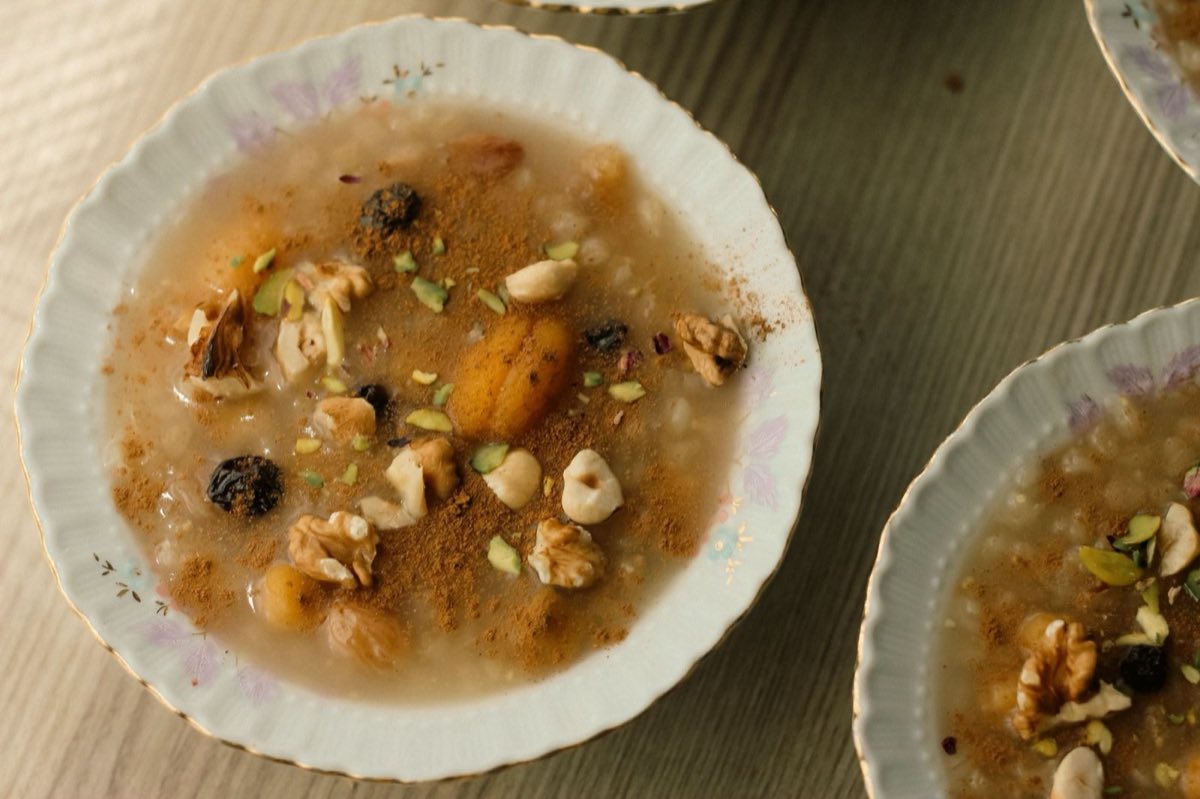
Dried apricots, prunes, raisins, and almonds soaked overnight in fragrant rose water and orange blossom water until plump and yielding — the ancient Ramadan compote of Syria and Lebanon, served cold at iftar as a sweet and restorative first course.
⏱ 15 min🍽 8 servings📍 Bekaa Valley
Cook this hands-free
Every Sofra recipe is free to read here on the web. In the app, 112 recipes are free to cook in full, and membership opens the rest. The optional supporter upgrade unlocks the audio experience — step-by-step English narration (text-to-speech) — plus hands-free Cooking Mode and Charbel Rouhana's original oud music.
Get Sofra on Google Play →
Free download. Zero third-party ads. Ever.
The story
Khushaf is one of the oldest Ramadan preparations in the Levant. It requires no cooking — only time, rose water, and good-quality dried fruit. The name comes from the Arabic for "to soak." The technique is ancient: before refrigeration, it was prepared in clay bowls in cool rooms overnight, producing a naturally preserved, self-sauced fruit compote that kept for days during the hot Ramadan weeks. Syrian tradition, particularly in Aleppo and Idlib, includes the full range of dried fruits — apricots, prunes, golden raisins, and sometimes dried figs or dates — along with raw nuts (almonds, pine nuts, pistachios) that hydrate partially in the fragrant soaking liquid and provide protein for the breaking of the fast. The liquid itself is as important as the fruit: perfumed with Lebanese rose water and orange blossom water, it becomes a fragrant, lightly sweet syrup overnight. Lebanese mountain families serve khushaf in a large glass bowl, the fruit and nuts arranged so the colors show — amber apricots against dark prunes against pale green pistachios. It is the first thing set on the iftar table after the dates.
Frequently asked questions
What is Khushaf?
Dried apricots, prunes, raisins, and almonds soaked overnight in fragrant rose water and orange blossom water until plump and yielding — the ancient Ramadan compote of Syria and Lebanon, served cold at iftar as a sweet and restorative first course.
Where is Khushaf from?
Khushaf comes from Bekaa Valley. Sofra documents this recipe as part of its 214-recipe Lebanese and Syrian heritage collection, including 49 dishes from Idlib province.
Is Khushaf vegetarian or vegan?
As written, Khushaf uses only plant-based ingredients, so it is suitable for both vegetarian and vegan diets. Always double-check the full ingredient list against your own dietary needs.
What do I serve with Khushaf?
In a Levantine desserts spread, Khushaf is served at the end of a meal or with afternoon coffee or tea. A little extra syrup or nuts on top is traditional where the recipe calls for them.
Can I make Khushaf ahead, and how do I store leftovers?
Most components can be prepared ahead. Store leftovers covered in the refrigerator and bring to room temperature before serving for the best texture; syrups and nut toppings are best added or refreshed close to serving.
Hear every step read aloud
Step-by-step audio narration (text-to-speech) guides you hands-free. Charbel Rouhana's original oud plays during Cooking Mode.
Get Sofra on Google Play →