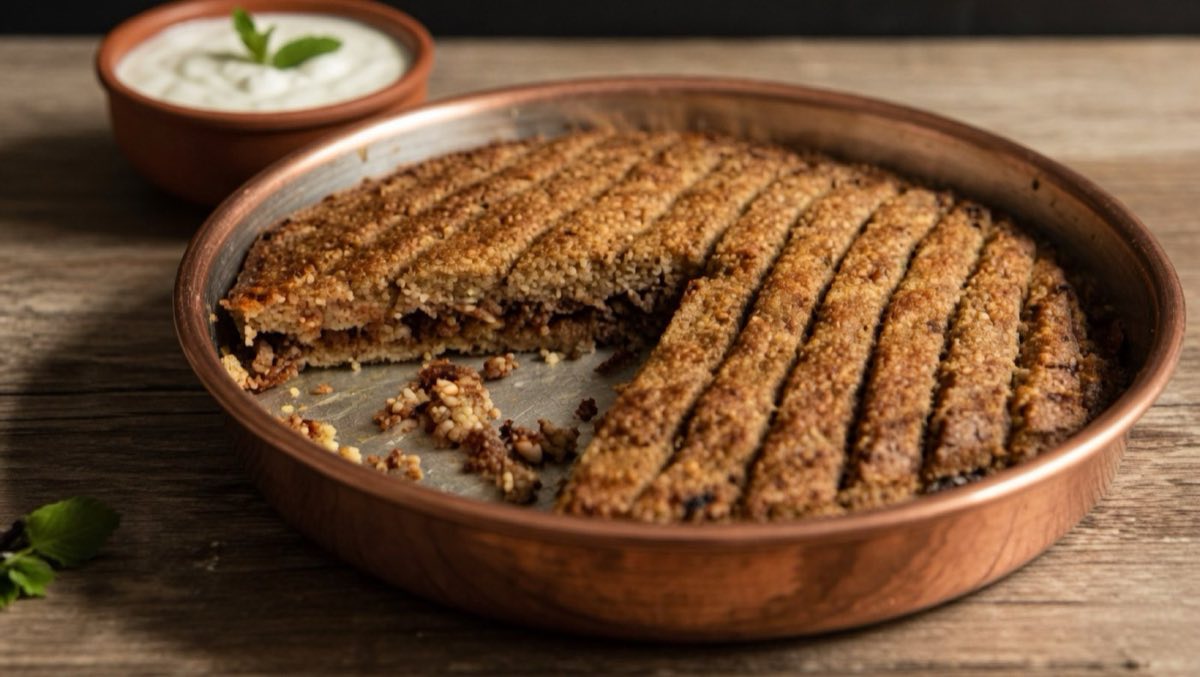
✓ Tested in Faten's kitchen
A celebrated raw lamb and bulgur dish, the crown jewel of Lebanese mountain cuisine, served at festive gatherings.
⏱ 45 min🍽 6 servings📍 Mount Lebanon
Cook this with Lebanese-Arabic narration
Every Sofra recipe is free to read here on the web. In the app, 112 recipes are free to cook in full, and membership opens the rest. The optional supporter upgrade unlocks the audio experience — Lebanese-Arabic narration (text-to-speech) — plus hands-free Cooking Mode and Charbel Rouhana's original oud music.
Get Sofra on Google Play →
Free download. Zero third-party ads. Ever.
The story
Kibbeh Nayeh — literally "raw kibbeh" — is the pride of the Lebanese Mountains and the single dish every Lebanese family uses to measure a butcher. It belongs to a Sunday ritual still practiced from Zgharta to Ehden to the Chouf: the father goes to a trusted butcher at dawn, buys the leg of a lamb slaughtered that same morning, and carries it home wrapped in newspaper while the meat is still warm. It is hand-pounded in a stone mortar (jurn) with fine bulgur, grated onion, and a family spice blend whose exact proportions are guarded secrets passed from grandmother to granddaughter — usually some combination of seven-spice, cinnamon, dried marjoram, and a breath of dried rose petal in the northern villages. The finished disc is spread on a platter, scored in a cross-hatch pattern to catch the olive oil, and eaten within 30 minutes of preparation, scooped up with raw white onion, fresh mint, and warm markook bread. The Lebanese Heritage Kitchen treats kibbeh nayeh as the ultimate test of trust: you eat it only in the home of a cook whose standards you know, and only from a butcher whose lambs you can name.
Frequently asked questions
What is Kibbeh Nayeh?
A celebrated raw lamb and bulgur dish, the crown jewel of Lebanese mountain cuisine, served at festive gatherings.
Where is Kibbeh Nayeh from?
Kibbeh Nayeh comes from Mount Lebanon. Sofra documents this recipe as part of its 214-recipe Lebanese and Syrian heritage collection, including 49 dishes from Idlib province.
Is Kibbeh Nayeh vegetarian?
No — as written, Kibbeh Nayeh includes meat, fish, or meat-based stock, so it is not vegetarian. See the ingredient list for the specific ingredients used.
What can I use instead of allspice in Kibbeh Nayeh?
The allspice called for here is part of the traditional recipe and gives Kibbeh Nayeh its traditional character, so keep it if you can. If you must substitute, choose the closest equivalent you have on hand and adjust to taste — the dish will shift slightly from the traditional version but still work. The Sofra app lists the full ingredient set and sourcing notes.
What do I serve with Kibbeh Nayeh?
In a Levantine appetizers spread, Kibbeh Nayeh is served as part of a mezze table — alongside warm pita or markook bread, other small dishes, and fresh vegetables. It also works as a starter before a larger meal.
Can I make Kibbeh Nayeh ahead, and how do I store leftovers?
Yes — leftovers keep well stored in an airtight container in the refrigerator for a few days. Reheat gently (or bring to room temperature for cold dishes) and taste to adjust seasoning before serving. Dishes with fresh herbs or dressing are freshest the day they are made.
Hear every step in Lebanese-Arabic
Step-by-step Lebanese-Arabic narration (text-to-speech) guides you hands-free. Charbel Rouhana's original oud plays during Cooking Mode.
Get Sofra on Google Play →