✓ Tested in Faten's kitchen
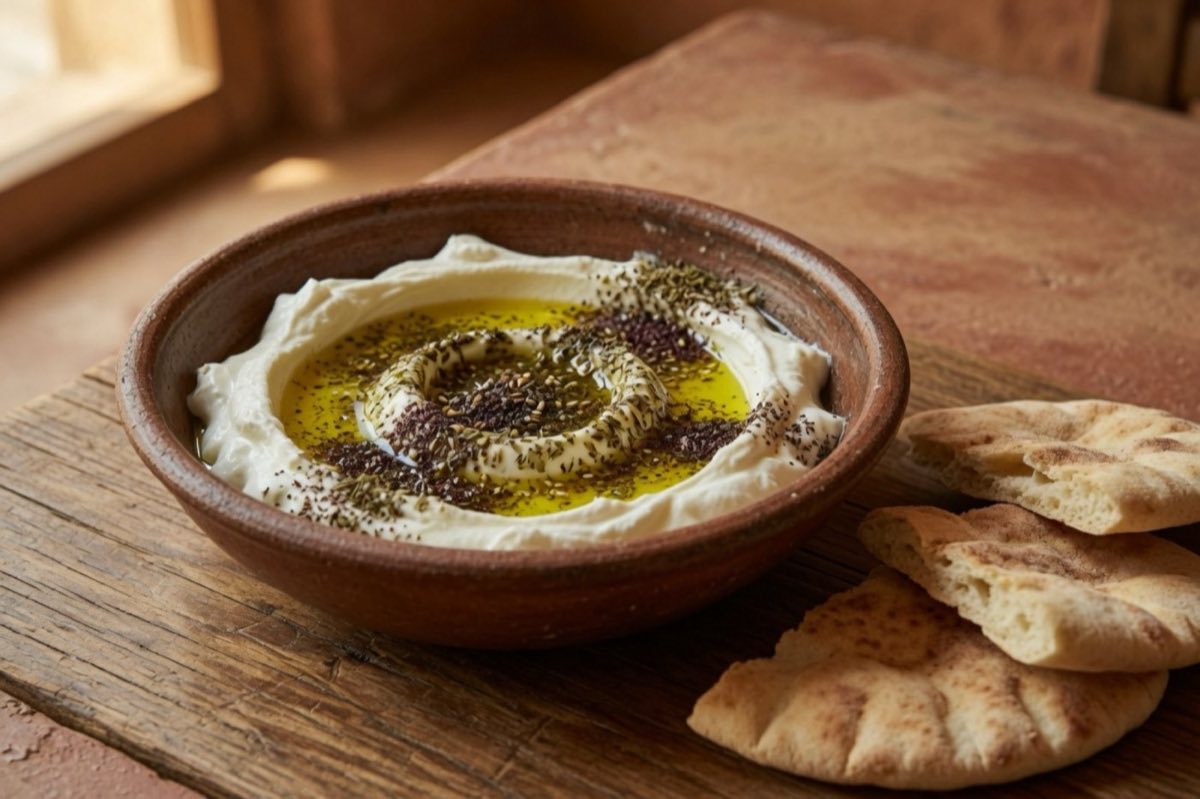
Thick, strained yogurt cheese drizzled with olive oil and dusted with za'atar — the most beloved everyday food of the Lebanese Mountains.
⏱ 10 min active + 8 h straining🍽 4 servings📍 Mount Lebanon
Cook this hands-free
Every Sofra recipe is free to read here on the web. In the app, 112 recipes are free to cook in full, and membership opens the rest. The optional supporter upgrade unlocks the audio experience — step-by-step English narration (text-to-speech) — plus hands-free Cooking Mode and Charbel Rouhana's original oud music.
Get Sofra on Google Play →
Free download. Zero third-party ads. Ever.
The story
Labneh is the soul of the Lebanese breakfast table and arguably the most democratic dish in the cuisine — eaten by mountain shepherds at dawn, by Beirut apartment dwellers on weekday mornings, and by diaspora families in São Paulo, Dearborn, and Sydney who taste home the moment a spoon touches it. In the mountain villages of the Metn and Chouf, labneh is still made fresh every day by hanging salted yogurt overnight in cloth bags (kees el labneh) from the kitchen hooks over a bowl, letting gravity slowly pull the whey out drop by drop. The resulting cheese is spread on a plate, a spoon drags a shallow well through its center, and the best olive oil the family owns — usually pressed from their own trees — is poured in until it pools. A shower of wild za'atar from the hillside (thyme, sumac, toasted sesame, salt) finishes the dish. The Lebanese Heritage Kitchen preserves labneh two further ways: rolled into walnut-sized balls (labneh makbouseh) and stored in glass jars under olive oil, where it will keep for months and taste better every week; and as labneh malboudeh, pressed into a cloth-lined mold overnight to become firm enough to slice. Every household has its own preferred consistency, and every Lebanese knows their mother's by touch.
Frequently asked questions
What is Labneh with Za'atar?
Thick, strained yogurt cheese drizzled with olive oil and dusted with za'atar — the most beloved everyday food of the Lebanese Mountains.
Where is Labneh with Za'atar from?
Labneh with Za'atar comes from Mount Lebanon. Sofra documents this recipe as part of its 214-recipe Lebanese and Syrian heritage collection, including 49 dishes from Idlib province.
Is Labneh with Za'atar vegetarian?
As written, Labneh with Za'atar contains no meat or fish, so it is suitable for vegetarians. It does include dairy or other animal-derived ingredients, so it is not vegan. Check the full ingredient list against your own dietary needs.
What can I use instead of za'atar spice blend in Labneh with Za'atar?
The za'atar spice blend called for here is part of the traditional recipe and gives Labneh with Za'atar its traditional character, so keep it if you can. If you must substitute, choose the closest equivalent you have on hand and adjust to taste — the dish will shift slightly from the traditional version but still work. The Sofra app lists the full ingredient set and sourcing notes.
What do I serve with Labneh with Za'atar?
In a Levantine appetizers spread, Labneh with Za'atar is served as part of a mezze table — alongside warm pita or markook bread, other small dishes, and fresh vegetables. It also works as a starter before a larger meal.
Can I make Labneh with Za'atar ahead, and how do I store leftovers?
Yes — leftovers keep well stored in an airtight container in the refrigerator for a few days. Reheat gently (or bring to room temperature for cold dishes) and taste to adjust seasoning before serving. Dishes with fresh herbs or dressing are freshest the day they are made.
Hear every step read aloud
Step-by-step audio narration (text-to-speech) guides you hands-free. Charbel Rouhana's original oud plays during Cooking Mode.
Get Sofra on Google Play →