✓ Tested in Faten's kitchen
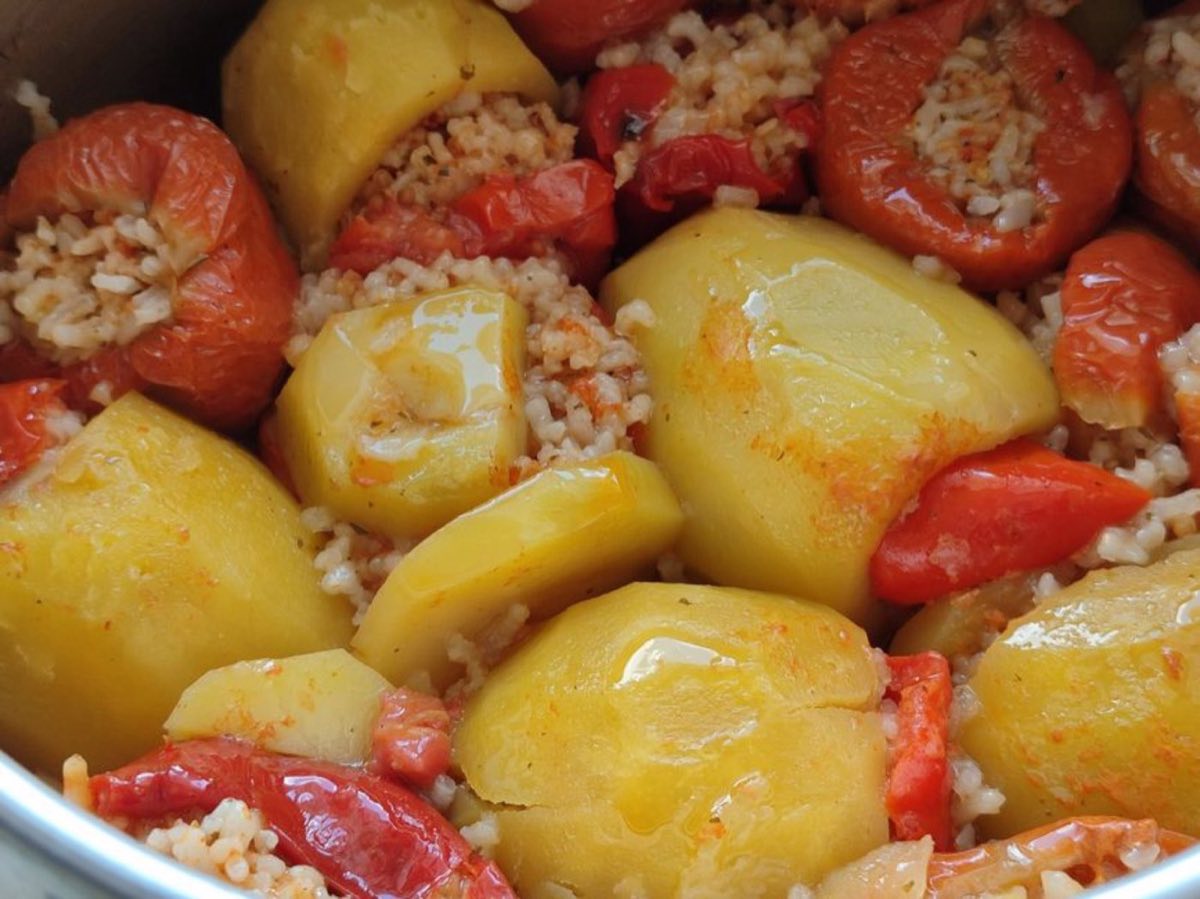
Hollowed vegetables — zucchini, peppers, and tomatoes — stuffed with fatty lamb and rice, then cooked in the lamb's own rendered fat with no added oil. Faten's version from Idlib uses the fat of the lamb itself to baste the stuffing as it cooks, producing a richness that no recipe using lean meat can replicate.
⏱ 150 min🍽 6 servings📍 Idlib
Cook this hands-free
Every Sofra recipe is free to read here on the web. In the app, 112 recipes are free to cook in full, and membership opens the rest. The optional supporter upgrade unlocks the audio experience — step-by-step English narration (text-to-speech) — plus hands-free Cooking Mode and Charbel Rouhana's original oud music.
Get Sofra on Google Play →
Free download. Zero third-party ads. Ever.
The story
Mahshi means "stuffed" in Arabic, and every family from the Levant to Egypt has a version. But Idlibi mahshi is distinct in two ways: no oil is added (the fatty lamb provides all the lubrication), and the stuffing ratio tips heavier toward meat than rice, which makes each piece more substantial and savory. In Idlib's agricultural villages, the lamb used was always the tail-fat breed — an ancient variety bred specifically for the richness of their fat. When Faten prepares mahshi in Beirut, she scouts the butcher for the fattiest lamb shoulder she can find. The vegetables are emptied carefully to keep their walls thin and even — too thick and they don't cook through; too thin and they burst. This is the kind of dish that takes an afternoon and fills the apartment with a smell that neighbors knock to ask about.
Frequently asked questions
What is Mahshi (Idlibi Stuffed Vegetables)?
Hollowed vegetables — zucchini, peppers, and tomatoes — stuffed with fatty lamb and rice, then cooked in the lamb's own rendered fat with no added oil. Faten's version from Idlib uses the fat of the lamb itself to baste the stuffing as it cooks, producing a richness that no recipe using lean meat can replicate.
Where is Mahshi (Idlibi Stuffed Vegetables) from?
Mahshi (Idlibi Stuffed Vegetables) comes from Idlib. Sofra documents this recipe as part of its 214-recipe Lebanese and Syrian heritage collection, including 49 dishes from Idlib province.
Is Mahshi (Idlibi Stuffed Vegetables) vegetarian?
No — as written, Mahshi (Idlibi Stuffed Vegetables) includes meat, fish, or meat-based stock, so it is not vegetarian. See the ingredient list for the specific ingredients used.
What can I use instead of seven-spice blend (baharat) in Mahshi (Idlibi Stuffed Vegetables)?
The seven-spice blend (baharat) called for here is part of the traditional recipe and gives Mahshi (Idlibi Stuffed Vegetables) its traditional character, so keep it if you can. If you must substitute, choose the closest equivalent you have on hand and adjust to taste — the dish will shift slightly from the traditional version but still work. The Sofra app lists the full ingredient set and sourcing notes.
What do I serve with Mahshi (Idlibi Stuffed Vegetables)?
In a Levantine mains spread, Mahshi (Idlibi Stuffed Vegetables) is typically served with rice or warm flatbread, a simple salad such as fattoush or tabbouleh, and pickles or yogurt on the side.
Can I make Mahshi (Idlibi Stuffed Vegetables) ahead, and how do I store leftovers?
Yes — leftovers keep well stored in an airtight container in the refrigerator for a few days. Reheat gently (or bring to room temperature for cold dishes) and taste to adjust seasoning before serving. Dishes with fresh herbs or dressing are freshest the day they are made.
Hear every step read aloud
Step-by-step audio narration (text-to-speech) guides you hands-free. Charbel Rouhana's original oud plays during Cooking Mode.
Get Sofra on Google Play →