✓ Tested in Faten's kitchen
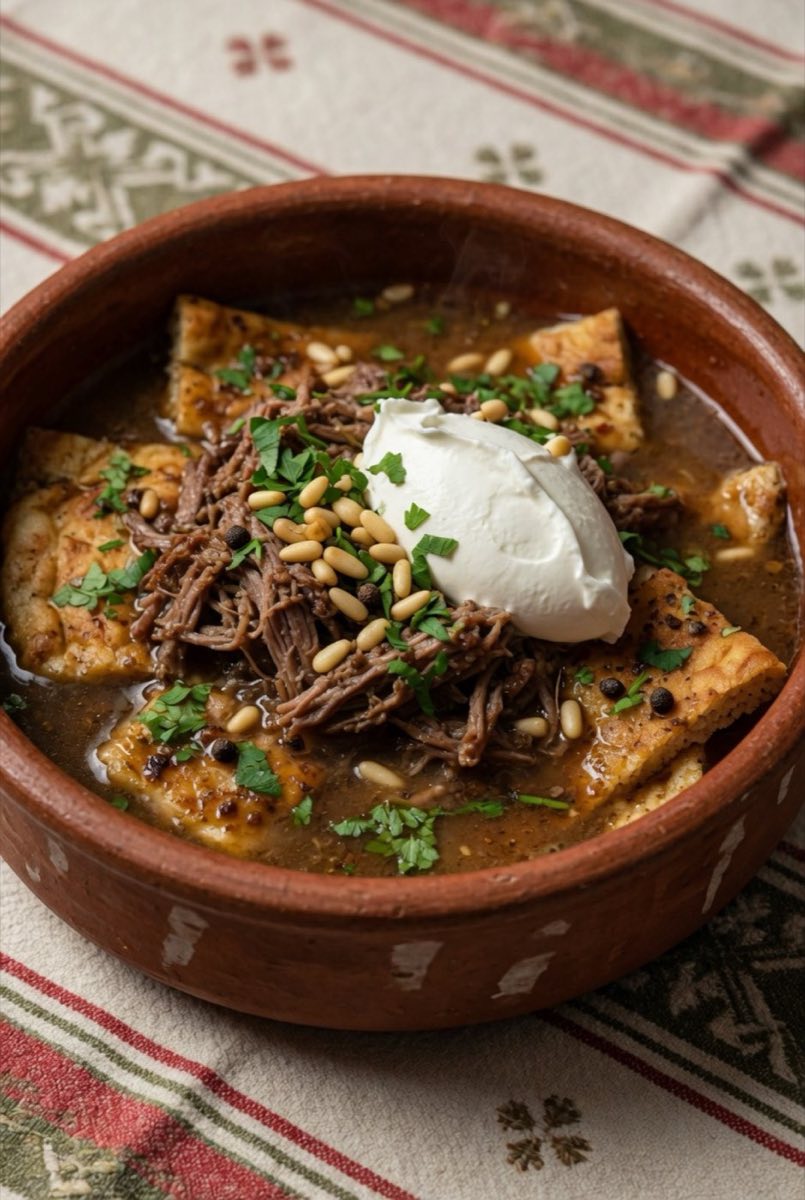
Stale flatbread torn by hand and soaked in rich lamb broth until swollen and silky — the Bekaa's peasant masterpiece. What began as a way to use leftover bread became a dish that Bekaa families deliberately seek out, making fresh bread old just to have an excuse to make mufattak.
⏱ 45 min🍽 4 servings📍 Bekaa Valley
Cook this hands-free
Every Sofra recipe is free to read here on the web. In the app, 112 recipes are free to cook in full, and membership opens the rest. The optional supporter upgrade unlocks the audio experience — step-by-step English narration (text-to-speech) — plus hands-free Cooking Mode and Charbel Rouhana's original oud music.
Get Sofra on Google Play →
Free download. Zero third-party ads. Ever.
The story
Mufattak is the ultimate Bekaa poverty-into-celebration story. Before refrigeration and before there was money for meat every day, the broth from a feast-day lamb would be poured over torn day-old bread — nothing was wasted. The dish is now actively nostalgic, associated with grandmothers and with the deep Bekaa interior around Baalbek and Yohmor. The tearing of the bread is done by hand, never cut — the torn edges absorb more broth. In Bekaa diaspora households in Detroit and Dearborn, mufattak is the unofficial post-funeral food: simple, restorative, and requiring no effort from grieving families.
Frequently asked questions
What is Bekaa Torn Bread in Lamb Broth?
Stale flatbread torn by hand and soaked in rich lamb broth until swollen and silky — the Bekaa's peasant masterpiece. What began as a way to use leftover bread became a dish that Bekaa families deliberately seek out, making fresh bread old just to have an excuse to make mufattak.
Where is Bekaa Torn Bread in Lamb Broth from?
Bekaa Torn Bread in Lamb Broth comes from Bekaa Valley. Sofra documents this recipe as part of its 214-recipe Lebanese and Syrian heritage collection, including 49 dishes from Idlib province.
Is Bekaa Torn Bread in Lamb Broth vegetarian?
No — as written, Bekaa Torn Bread in Lamb Broth includes meat, fish, or meat-based stock, so it is not vegetarian. See the ingredient list for the specific ingredients used.
What can I use instead of ground cinnamon in Bekaa Torn Bread in Lamb Broth?
The ground cinnamon called for here is part of the traditional recipe and gives Bekaa Torn Bread in Lamb Broth its traditional character, so keep it if you can. If you must substitute, choose the closest equivalent you have on hand and adjust to taste — the dish will shift slightly from the traditional version but still work. The Sofra app lists the full ingredient set and sourcing notes.
What do I serve with Bekaa Torn Bread in Lamb Broth?
In a Levantine mains spread, Bekaa Torn Bread in Lamb Broth is typically served with rice or warm flatbread, a simple salad such as fattoush or tabbouleh, and pickles or yogurt on the side.
Can I make Bekaa Torn Bread in Lamb Broth ahead, and how do I store leftovers?
Yes — leftovers keep well stored in an airtight container in the refrigerator for a few days. Reheat gently (or bring to room temperature for cold dishes) and taste to adjust seasoning before serving. Dishes with fresh herbs or dressing are freshest the day they are made.
Hear every step read aloud
Step-by-step audio narration (text-to-speech) guides you hands-free. Charbel Rouhana's original oud plays during Cooking Mode.
Get Sofra on Google Play →