✓ Tested in Faten's kitchen
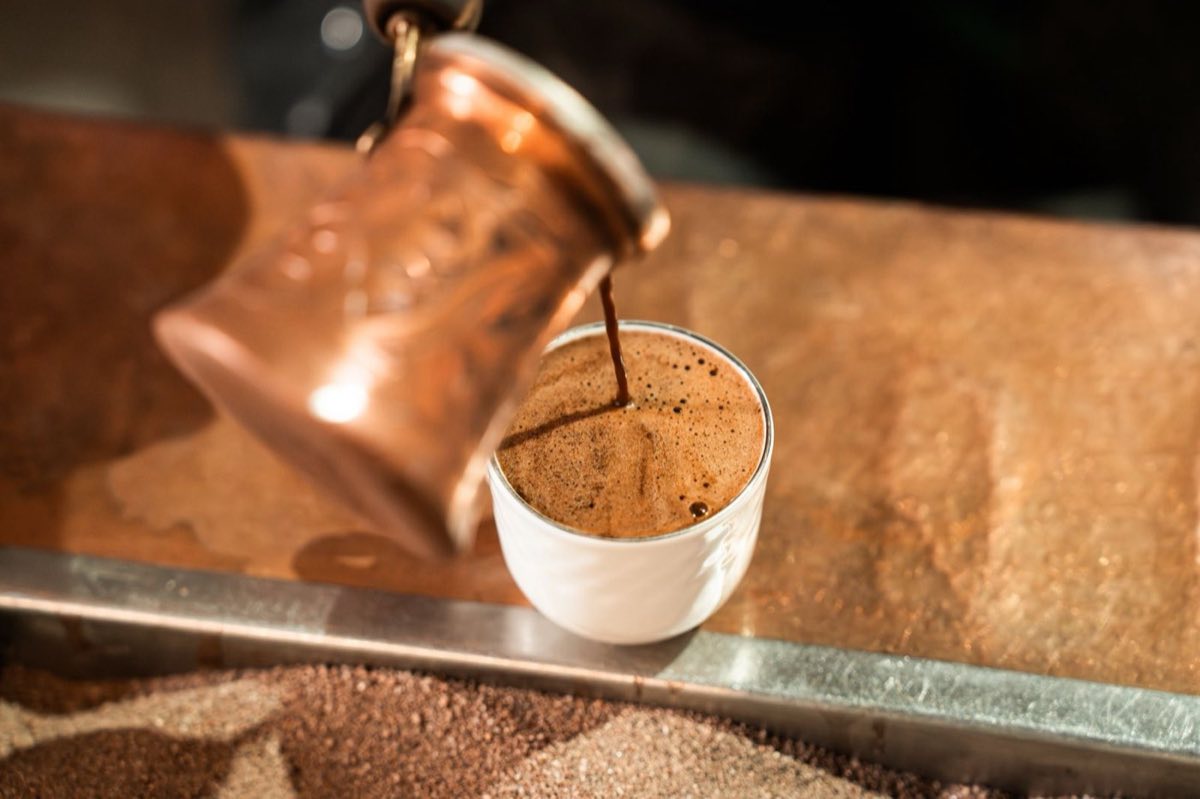
Light, pale-gold coffee brewed with green (unroasted) or lightly roasted beans and cardamom — served in small handleless cups called finjans, without sugar, as the first gesture of welcome in any Lebanese or Syrian home.
Also known as qahweh arabiyeh
⏱ 15 min🍽 4 servings📍 Mount Lebanon
Cook this hands-free
Every Sofra recipe is free to read here on the web. In the app, 112 recipes are free to cook in full, and membership opens the rest. The optional supporter upgrade unlocks the audio experience — step-by-step English narration (text-to-speech) — plus hands-free Cooking Mode and Charbel Rouhana's original oud music.
Get Sofra on Google Play →
Free download. Zero third-party ads. Ever.
The story
Arabic coffee is not a drink — it is a ritual. In Lebanon and Syria, offering qahweh is the first act of hospitality: a guest who declines risks causing mild offense. The coffee is brewed pale and perfumed, nothing like the dark espresso of the West, and drunk in small sips from unglazed clay or porcelain cups. In mountain villages, the dallah (brass coffee pot) lives permanently on the fire. Families have their own ratios of cardamom: the Druze mountains lean heavier on hel (cardamom); coastal families sometimes add a thread of saffron or a pinch of mastic. In Idlib, qahweh is brewed slightly darker than the Gulf style but still fragrant with cardamom and often offered alongside a plate of dates. The Lebanese diaspora worldwide maintains this ritual — the dallah comes out for every visitor, every negotiation, every birth announcement, every condolence visit.
Frequently asked questions
What is Arabic Coffee?
Light, pale-gold coffee brewed with green (unroasted) or lightly roasted beans and cardamom — served in small handleless cups called finjans, without sugar, as the first gesture of welcome in any Lebanese or Syrian home.
Where is Arabic Coffee from?
Arabic Coffee comes from Mount Lebanon. Sofra documents this recipe as part of its 214-recipe Lebanese and Syrian heritage collection, including 49 dishes from Idlib province.
Is Arabic Coffee vegetarian or vegan?
As written, Arabic Coffee uses only plant-based ingredients, so it is suitable for both vegetarian and vegan diets. Always double-check the full ingredient list against your own dietary needs.
What can I use instead of ground cardamom (hel) in Arabic Coffee?
The ground cardamom (hel) called for here is part of the traditional recipe and gives Arabic Coffee its traditional character, so keep it if you can. If you must substitute, choose the closest equivalent you have on hand and adjust to taste — the dish will shift slightly from the traditional version but still work. The Sofra app lists the full ingredient set and sourcing notes.
What do I serve with Arabic Coffee?
In a Levantine drinks spread, Arabic Coffee is served as a refreshment on its own, warm or chilled as the recipe directs.
Can I make Arabic Coffee ahead, and how do I store leftovers?
This can be made ahead and kept covered in the refrigerator. Stir or shake before serving, and adjust sweetness or dilution to taste.
Hear every step read aloud
Step-by-step audio narration (text-to-speech) guides you hands-free. Charbel Rouhana's original oud plays during Cooking Mode.
Get Sofra on Google Play →