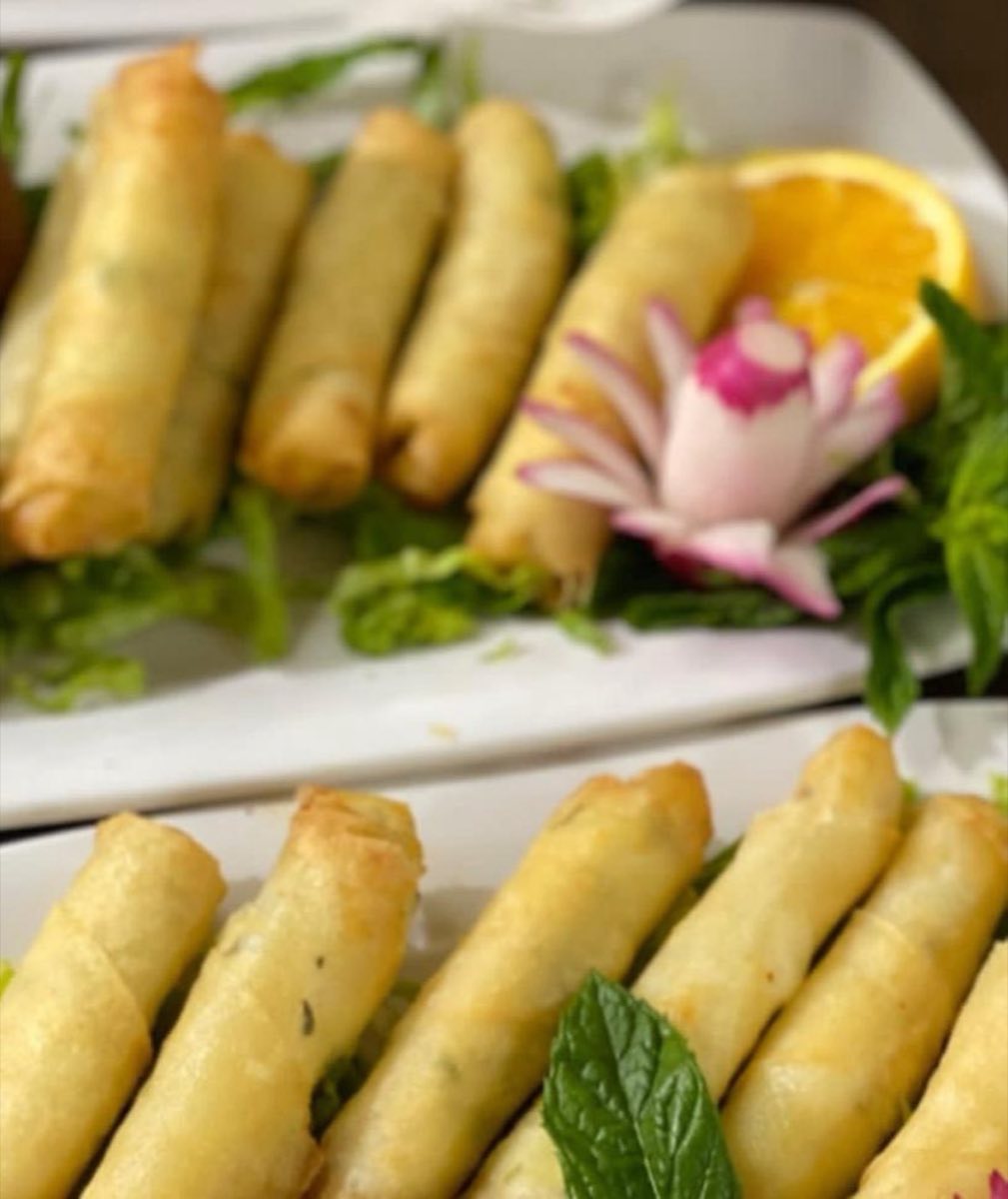
✓ Tested in Faten's kitchen
Thin phyllo pastry rolled around a filling of white cheese, fresh herbs, and a pinch of Aleppo pepper, then fried until shattering-crisp and golden — the ubiquitous Ramadan starter of Lebanese and Syrian homes, plated alongside soup and salad at every iftar.
⏱ 35 min🍽 8 servings📍 Lebanese coast
Cook this hands-free
Every Sofra recipe is free to read here on the web. In the app, 112 recipes are free to cook in full, and membership opens the rest. The optional supporter upgrade unlocks the audio experience — step-by-step English narration (text-to-speech) — plus hands-free Cooking Mode and Charbel Rouhana's original oud music.
Get Sofra on Google Play →
Free download. Zero third-party ads. Ever.
The story
Rakakat (singular: raqqa — from the Arabic for "thin" or "delicate") are the Lebanese and Syrian answer to the Turkish sigara böreği: thin phyllo sheets rolled into finger-length cigars around a cheese filling and fried or baked until crisp. They appear at iftar tables across the Levant throughout Ramadan and year-round at parties, family gatherings, and mezze spreads. In Beirut's catering culture, rakakat are the standard first plate — a stack of golden, crackling rolls placed on the table as guests sit down, eaten hot with yogurt or hot sauce. The filling is simple: white Lebanese cheese (akkawi or halloumi), fresh parsley, and just enough red pepper for warmth. The rolling technique matters: too tight and the pastry tears; too loose and the filling falls out during frying. Once learned, it becomes instinctive and fast — a skilled home cook can roll 30 rakakat in 20 minutes. In Idlib, the Syrian version uses shanklish (aged spiced cheese) instead of fresh cheese, producing a sharper, more complex filling.
Frequently asked questions
What is Rakakat bil Jibn?
Thin phyllo pastry rolled around a filling of white cheese, fresh herbs, and a pinch of Aleppo pepper, then fried until shattering-crisp and golden — the ubiquitous Ramadan starter of Lebanese and Syrian homes, plated alongside soup and salad at every iftar.
Where is Rakakat bil Jibn from?
Rakakat bil Jibn comes from Lebanese coast. Sofra documents this recipe as part of its 214-recipe Lebanese and Syrian heritage collection, including 49 dishes from Idlib province.
Is Rakakat bil Jibn vegetarian?
As written, Rakakat bil Jibn contains no meat or fish, so it is suitable for vegetarians. It does include dairy or other animal-derived ingredients, so it is not vegan. Check the full ingredient list against your own dietary needs.
What can I use instead of akkawi cheese or halloumi, grated in Rakakat bil Jibn?
The akkawi cheese or halloumi, grated called for here is part of the traditional recipe and gives Rakakat bil Jibn its traditional character, so keep it if you can. If you must substitute, choose the closest equivalent you have on hand and adjust to taste — the dish will shift slightly from the traditional version but still work. The Sofra app lists the full ingredient set and sourcing notes.
What do I serve with Rakakat bil Jibn?
In a Levantine appetizers spread, Rakakat bil Jibn is served as part of a mezze table — alongside warm pita or markook bread, other small dishes, and fresh vegetables. It also works as a starter before a larger meal.
Can I make Rakakat bil Jibn ahead, and how do I store leftovers?
Yes — leftovers keep well stored in an airtight container in the refrigerator for a few days. Reheat gently (or bring to room temperature for cold dishes) and taste to adjust seasoning before serving. Dishes with fresh herbs or dressing are freshest the day they are made.
Hear every step read aloud
Step-by-step audio narration (text-to-speech) guides you hands-free. Charbel Rouhana's original oud plays during Cooking Mode.
Get Sofra on Google Play →