✓ Tested in Faten's kitchen
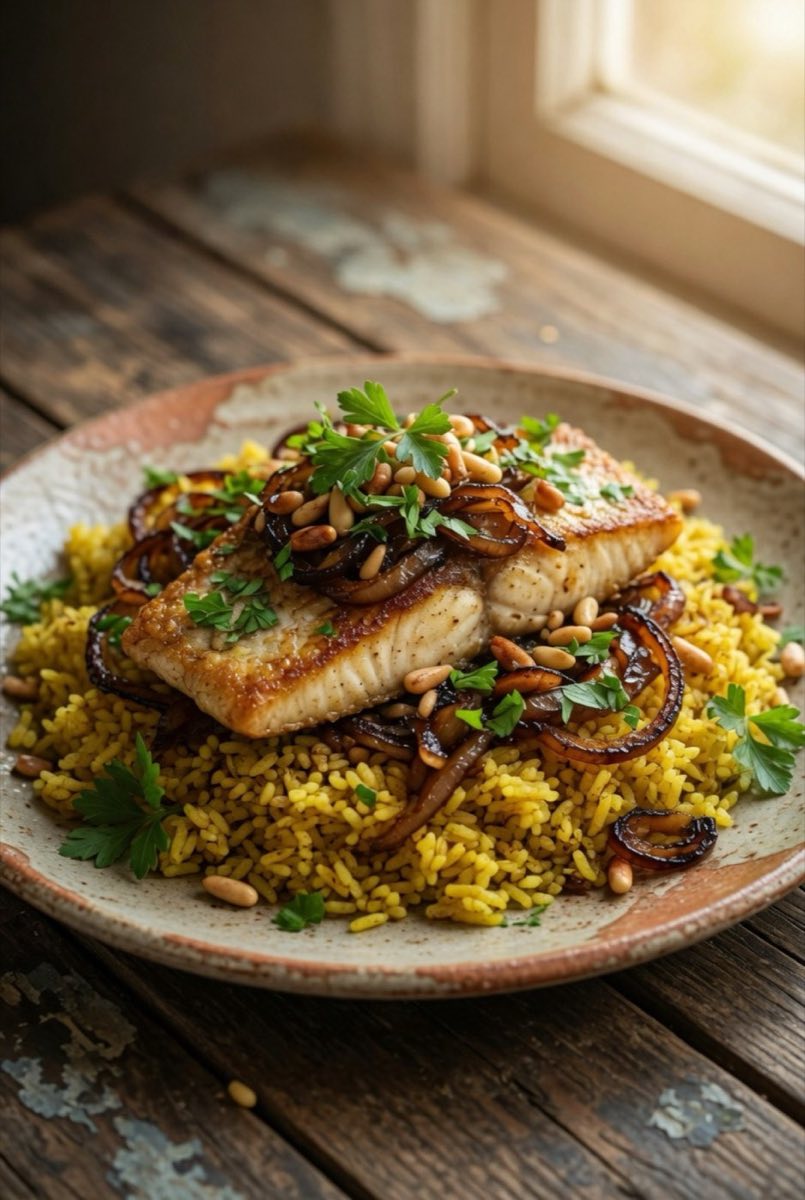
The crown jewel of the Lebanese coast: firm white fish poached in its own head-and-bone stock, served over saffron-gold rice perfumed with cumin, baharat, and turmeric, and finished with a mountain of mahogany-dark caramelized onions and toasted pine nuts. This is the dish that defines Tripoli.
⏱ 95 min🍽 4 servings📍 Lebanese coast
Cook this hands-free
Every Sofra recipe is free to read here on the web. In the app, 112 recipes are free to cook in full, and membership opens the rest. The optional supporter upgrade unlocks the audio experience — step-by-step English narration (text-to-speech) — plus hands-free Cooking Mode and Charbel Rouhana's original oud music.
Get Sofra on Google Play →
Free download. Zero third-party ads. Ever.
The story
Sayadieh — from صياد, fisherman — was first documented in a Lebanese cookbook in 1890, and the dish almost certainly predates that record by centuries. It belongs to the coastal cities: Tripoli (where it is most fiercely claimed), Byblos, Sidon, and Tyre. The method is fisherman logic made into haute cuisine: nothing goes to waste. The fish head and bones go into the stockpot first with caramelized onion and whole spices, producing a deeply savory, amber-colored stock. The rice is then cooked in that stock, absorbing every layer of flavor the sea and the fire have created. The fish itself — sea bass, red snapper, grouper, whatever was pulled from the net that morning — is seared separately and laid on top of the rice just before serving, so it stays golden and crisp-edged. The two-stage caramelized onion technique is the signature of a Tripoli cook: one batch goes into the stock, one batch is crisped darker still for the garnish. Served at wedding banquets, Friday family lunches, and in the fish restaurants lining the Tripoli corniche where the smell of the dish drifts into the street. The dish travels to the Lebanese diaspora in West Africa, South America, and Australia — always associated with the moment someone brings fresh fish home.
Frequently asked questions
What is Sayadieh?
The crown jewel of the Lebanese coast: firm white fish poached in its own head-and-bone stock, served over saffron-gold rice perfumed with cumin, baharat, and turmeric, and finished with a mountain of mahogany-dark caramelized onions and toasted pine nuts. This is the dish that defines Tripoli.
Where is Sayadieh from?
Sayadieh comes from Lebanese coast. Sofra documents this recipe as part of its 214-recipe Lebanese and Syrian heritage collection, including 49 dishes from Idlib province.
Is Sayadieh vegetarian?
No — as written, Sayadieh includes meat, fish, or meat-based stock, so it is not vegetarian. See the ingredient list for the specific ingredients used.
What can I use instead of bay leaves in Sayadieh?
The bay leaves called for here is part of the traditional recipe and gives Sayadieh its traditional character, so keep it if you can. If you must substitute, choose the closest equivalent you have on hand and adjust to taste — the dish will shift slightly from the traditional version but still work. The Sofra app lists the full ingredient set and sourcing notes.
What do I serve with Sayadieh?
In a Levantine mains spread, Sayadieh is typically served with rice or warm flatbread, a simple salad such as fattoush or tabbouleh, and pickles or yogurt on the side.
Can I make Sayadieh ahead, and how do I store leftovers?
Yes — leftovers keep well stored in an airtight container in the refrigerator for a few days. Reheat gently (or bring to room temperature for cold dishes) and taste to adjust seasoning before serving. Dishes with fresh herbs or dressing are freshest the day they are made.
Hear every step read aloud
Step-by-step audio narration (text-to-speech) guides you hands-free. Charbel Rouhana's original oud plays during Cooking Mode.
Get Sofra on Google Play →