✓ Tested in Faten's kitchen
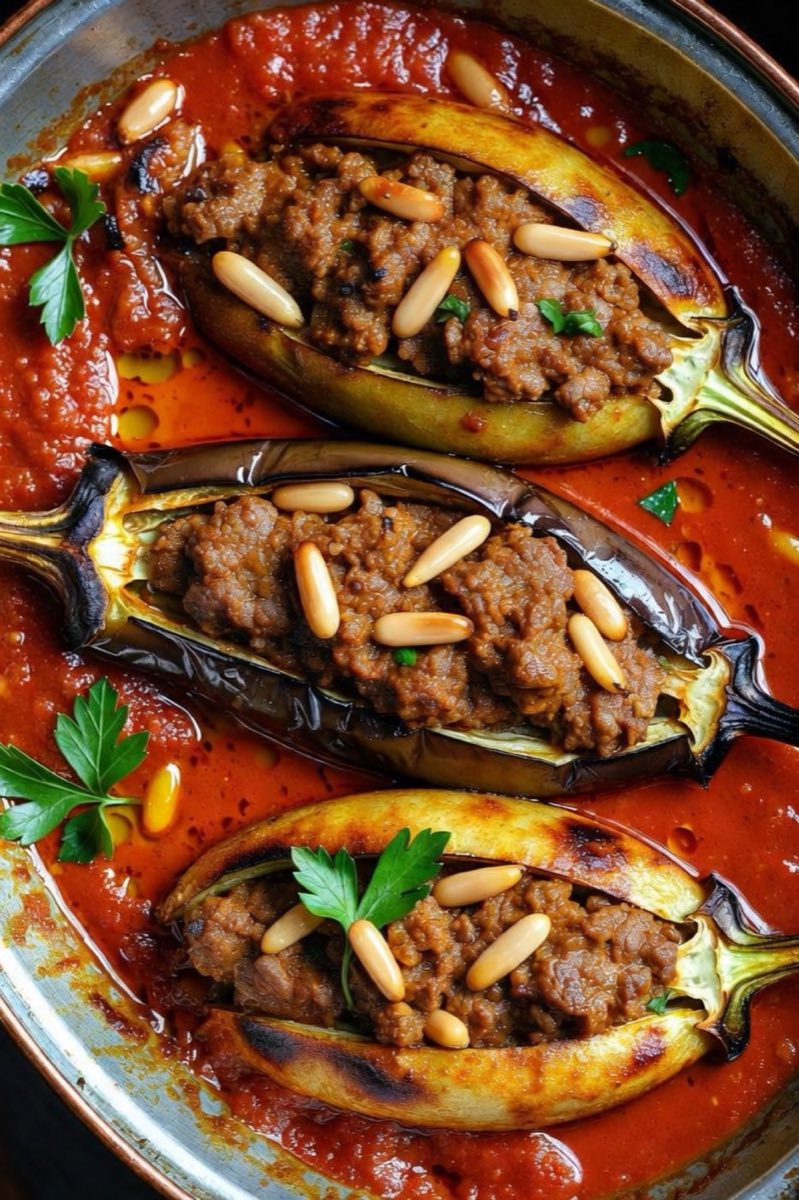
Eggplants stuffed with spiced minced lamb and pine nuts, simmered in a rich tomato sauce — the "king of stuffed vegetables."
⏱ 75 min🍽 4 servings📍 Bekaa Valley
Cook this hands-free
Every Sofra recipe is free to read here on the web. In the app, 112 recipes are free to cook in full, and membership opens the rest. The optional supporter upgrade unlocks the audio experience — step-by-step English narration (text-to-speech) — plus hands-free Cooking Mode and Charbel Rouhana's original oud music.
Get Sofra on Google Play →
Free download. Zero third-party ads. Ever.
The story
The name Sheikh el-Mahshi translates, roughly, as "the sheikh of stuffed dishes" — a deliberate honorific that places this recipe at the head of the long Lebanese tradition of mahashi (stuffed vegetables). Unlike its cousins — stuffed zucchini, stuffed vine leaves, stuffed cabbage — Sheikh el-Mahshi is made with the fattest, most tender late-summer eggplants, and the stuffing is unusually rich: lamb, caramelized onion, and toasted pine nuts bound with seven-spice and cinnamon rather than rice. That departure from the rice-based stuffings of poorer dishes is exactly what earns it the royal name. The Bekaa Valley, where eggplants ripen under the long plateau summer and the purple fruits sometimes grow to the length of a forearm, claims the dish as its own, and Bekaa grandmothers serve it with vermicelli rice and a bowl of cold yogurt on Sunday lunches that last four hours. The Lebanese Heritage Kitchen insists on roasting the eggplants first, never frying: the oven coaxes out the bitterness, collapses the flesh into silk, and lets the lamb filling perfume every bite without grease. In Syrian households across the border in Homs and Idlib, the same dish appears under the same name but is built with more tomato and sometimes a sprinkle of Aleppo pepper — a reminder that the Bekaa and western Syria share one kitchen separated by a line on a map.
Frequently asked questions
What is Sheikh Mahshi?
Eggplants stuffed with spiced minced lamb and pine nuts, simmered in a rich tomato sauce — the "king of stuffed vegetables."
Where is Sheikh Mahshi from?
Sheikh Mahshi comes from Bekaa Valley. Sofra documents this recipe as part of its 214-recipe Lebanese and Syrian heritage collection, including 49 dishes from Idlib province.
Is Sheikh Mahshi vegetarian?
No — as written, Sheikh Mahshi includes meat, fish, or meat-based stock, so it is not vegetarian. See the ingredient list for the specific ingredients used.
What can I use instead of allspice in Sheikh Mahshi?
The allspice called for here is part of the traditional recipe and gives Sheikh Mahshi its traditional character, so keep it if you can. If you must substitute, choose the closest equivalent you have on hand and adjust to taste — the dish will shift slightly from the traditional version but still work. The Sofra app lists the full ingredient set and sourcing notes.
What do I serve with Sheikh Mahshi?
In a Levantine mains spread, Sheikh Mahshi is typically served with rice or warm flatbread, a simple salad such as fattoush or tabbouleh, and pickles or yogurt on the side.
Can I make Sheikh Mahshi ahead, and how do I store leftovers?
Yes — leftovers keep well stored in an airtight container in the refrigerator for a few days. Reheat gently (or bring to room temperature for cold dishes) and taste to adjust seasoning before serving. Dishes with fresh herbs or dressing are freshest the day they are made.
Hear every step read aloud
Step-by-step audio narration (text-to-speech) guides you hands-free. Charbel Rouhana's original oud plays during Cooking Mode.
Get Sofra on Google Play →