✓ Tested in Faten's kitchen
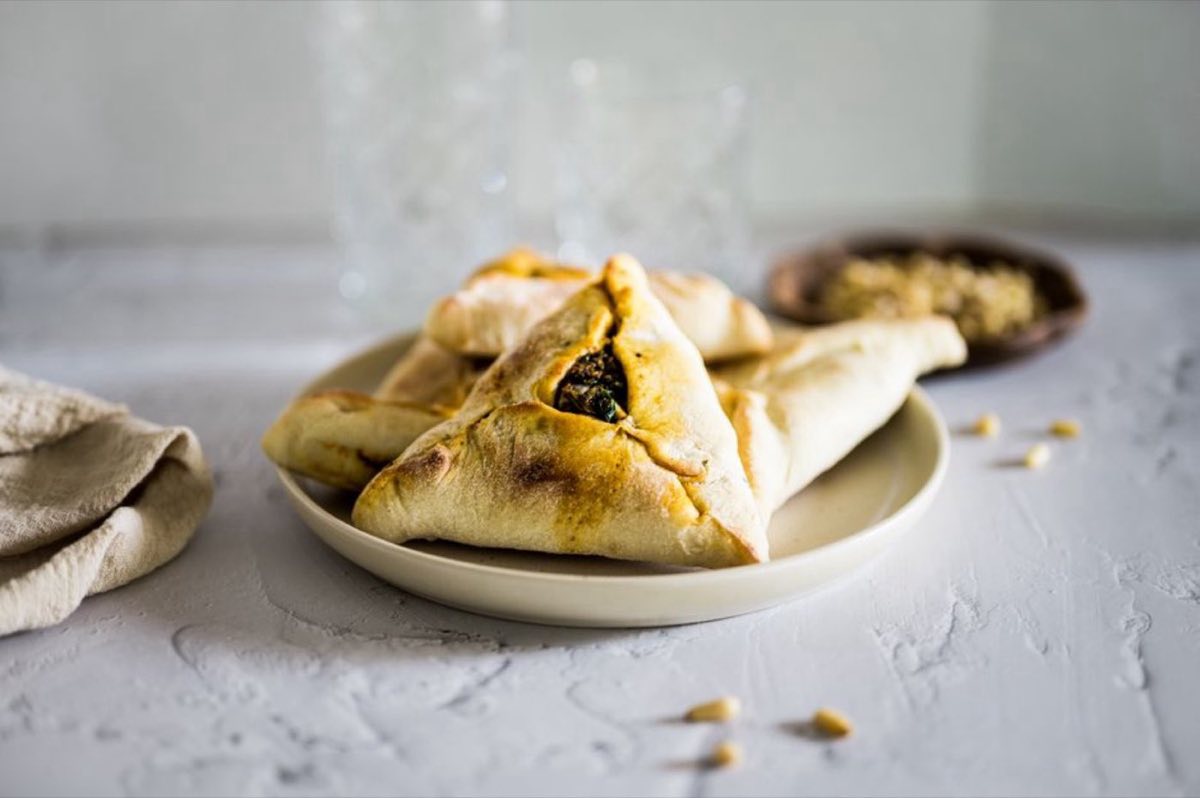
Delicate triangular pastries pinched shut around a filling of wilted spinach, sumac, onion, and lemon — sold hot from mountain village bakeries and eaten in one or two bites at any hour of the day.
⏱ 110 min🍽 12 servings📍 Mount Lebanon
Cook this hands-free
Every Sofra recipe is free to read here on the web. In the app, 112 recipes are free to cook in full, and membership opens the rest. The optional supporter upgrade unlocks the audio experience — step-by-step English narration (text-to-speech) — plus hands-free Cooking Mode and Charbel Rouhana's original oud music.
Get Sofra on Google Play →
Free download. Zero third-party ads. Ever.
The story
Fatayer are the portable food of the Lebanese Mountain villages — baked in communal wood-fired ovens (al-forn) and sold by weight, they sustained farmers and shepherds for centuries. The spinach version is tarter and lighter than the meat-filled sfeeha. Lebanese immigrants brought fatayer to Detroit and Dearborn, Michigan, where the Arab-American community maintains family-run fatayer bakeries as neighborhood institutions. The distinctive three-cornered shape is an art form — mastering the pinch is the mark of a skilled baker.
Frequently asked questions
What is Spinach Fatayer?
Delicate triangular pastries pinched shut around a filling of wilted spinach, sumac, onion, and lemon — sold hot from mountain village bakeries and eaten in one or two bites at any hour of the day.
Where is Spinach Fatayer from?
Spinach Fatayer comes from Mount Lebanon. Sofra documents this recipe as part of its 214-recipe Lebanese and Syrian heritage collection, including 49 dishes from Idlib province.
Is Spinach Fatayer vegetarian or vegan?
As written, Spinach Fatayer uses only plant-based ingredients, so it is suitable for both vegetarian and vegan diets. Always double-check the full ingredient list against your own dietary needs.
What can I use instead of ground sumac in Spinach Fatayer?
The ground sumac called for here is part of the traditional recipe and gives Spinach Fatayer its traditional character, so keep it if you can. If you must substitute, choose the closest equivalent you have on hand and adjust to taste — the dish will shift slightly from the traditional version but still work. The Sofra app lists the full ingredient set and sourcing notes.
What do I serve with Spinach Fatayer?
In a Levantine breads spread, Spinach Fatayer is served warm — with dips like hummus, labneh, or za'atar and olive oil, or alongside any main dish.
Can I make Spinach Fatayer ahead, and how do I store leftovers?
Breads are best fresh and warm. If you make this ahead, let it cool completely, store it in an airtight bag or container, and gently rewarm before serving. Many flatbreads also freeze well.
Hear every step read aloud
Step-by-step audio narration (text-to-speech) guides you hands-free. Charbel Rouhana's original oud plays during Cooking Mode.
Get Sofra on Google Play →