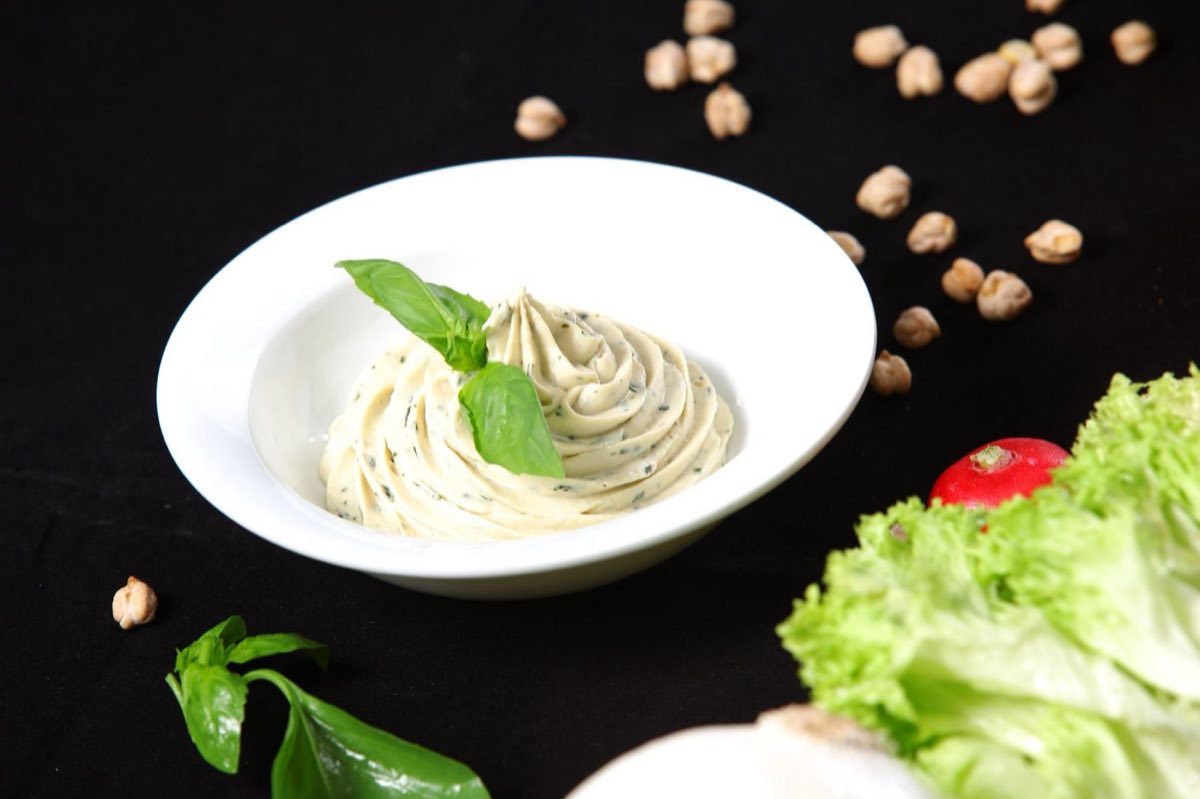
✓ Tested in Faten's kitchen
The Lebanese garlic sauce: a pure white, cloud-light emulsion of garlic, oil, lemon, and salt — not aioli, not mayonnaise, nothing else. Made with patience and a food processor, it is one of the most technically demanding condiments in Lebanese cuisine.
⏱ 30 min🍽 24 servings📍 Mount Lebanon
Cook this hands-free
Every Sofra recipe is free to read here on the web. In the app, 112 recipes are free to cook in full, and membership opens the rest. The optional supporter upgrade unlocks the audio experience — step-by-step English narration (text-to-speech) — plus hands-free Cooking Mode and Charbel Rouhana's original oud music.
Get Sofra on Google Play →
Free download. Zero third-party ads. Ever.
The story
Toum is the condiment that divides Lebanese food from everything else. It has four ingredients: garlic, oil, lemon juice, and salt. No egg. No yolk. No cream. The garlic provides the lecithin that holds an emulsion, but only if the technique is correct: the oil must be added in a stream so thin it is almost a mist, the lemon must be added in alternating doses, and the food processor must run continuously. When it works, toum becomes a white, fluffy sauce with the texture of whipped cream and an assertive but not raw garlic punch. When it fails, it is a puddle of oil. Lebanese mountain households always have a jar in the refrigerator. It is the mandatory companion to grilled chicken, kafta, and shish taouk. Lebanese expatriates in Paris, São Paulo, and Dearborn say that finding good toum is the first test of any Lebanese restaurant.
Frequently asked questions
What is Toum?
The Lebanese garlic sauce: a pure white, cloud-light emulsion of garlic, oil, lemon, and salt — not aioli, not mayonnaise, nothing else. Made with patience and a food processor, it is one of the most technically demanding condiments in Lebanese cuisine.
Where is Toum from?
Toum comes from Mount Lebanon. Sofra documents this recipe as part of its 214-recipe Lebanese and Syrian heritage collection, including 49 dishes from Idlib province.
Is Toum vegetarian or vegan?
As written, Toum uses only plant-based ingredients, so it is suitable for both vegetarian and vegan diets. Always double-check the full ingredient list against your own dietary needs.
What can I use instead of garlic cloves, peeled in Toum?
The garlic cloves, peeled called for here is part of the traditional recipe and gives Toum its traditional character, so keep it if you can. If you must substitute, choose the closest equivalent you have on hand and adjust to taste — the dish will shift slightly from the traditional version but still work. The Sofra app lists the full ingredient set and sourcing notes.
What do I serve with Toum?
In a Levantine condiments spread, Toum is served as an accompaniment — spooned alongside grilled meats, vegetables, breads, or other mezze dishes.
Can I make Toum ahead, and how do I store leftovers?
Yes — leftovers keep well stored in an airtight container in the refrigerator for a few days. Reheat gently (or bring to room temperature for cold dishes) and taste to adjust seasoning before serving. Dishes with fresh herbs or dressing are freshest the day they are made.
Hear every step read aloud
Step-by-step audio narration (text-to-speech) guides you hands-free. Charbel Rouhana's original oud plays during Cooking Mode.
Get Sofra on Google Play →