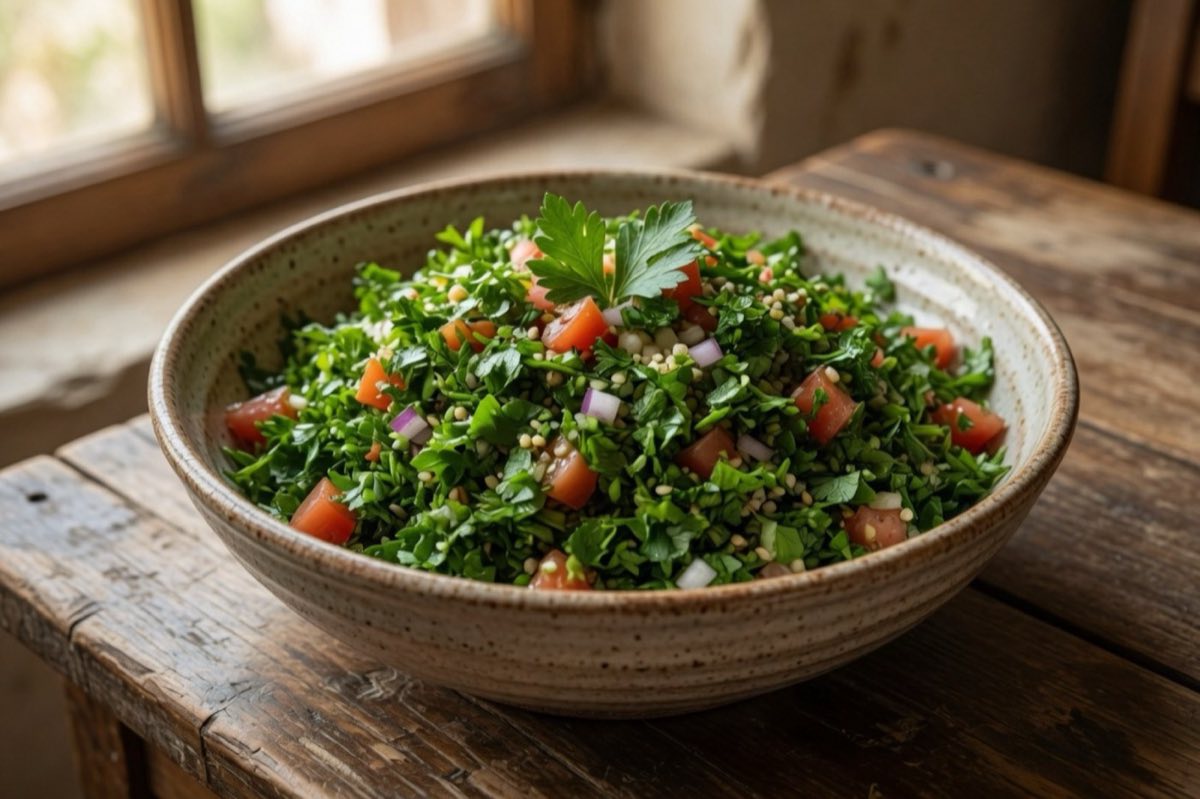
Parboiled, dried and cracked durum wheat — the grain of the Levant. It comes in four grades, and the grade matters more than the brand: the wrong one is the single most common reason a kibbeh shell cracks or a tabbouleh turns stodgy.
Also known as burghul · bourghol · borghol · cracked wheat
- Arabicبرغلburghul
- What it isDurum wheat, parboiled, dried and cracked
- Sold asFour grades, #1 fine to #4 very coarse
- Fine (#1)Hydrates raw in lemon juice. Tabbouleh and kibbeh
- Coarse (#3)Needs cooking. Pilaf and mujaddara
- KeepsA year or more, sealed, cool and dry
The Ingredient Atlas, in your pocket
Every Sofra recipe is free to read here on the web. The app carries an Ingredient Atlas covering Bulgur and dozens more Levantine ingredients — in English, Arabic and Portuguese, with the name in French and Spanish too — alongside a free collection of 112 recipes to cook from.
Get Sofra — free download →What it tastes and smells like
Mild, wheaty and faintly toasted from the parboiling — bulgur is a texture before it is a flavour. What changes from dish to dish is the grade, not the taste.
It is already cooked once, which is why fine bulgur will soften in nothing more than lemon juice and chopped tomato, and why coarse bulgur cooks so much faster than raw wheat.
Which kind
- Fine, #1Hydrates raw. Tabbouleh, where it is a seasoning rather than a bulk ingredient, and kibbeh, where fine is what holds a shell together.
- Medium, #2The versatile grade. Kibbeh, salads and stuffings.
- Coarse, #3Needs cooking. Pilafs, mujaddara and side dishes.
- Very coarse, #4Slow-cooked dishes, and ground down for porridge.
For tabbouleh use fine, #1. For kibbeh use fine or medium. Coarse bulgur cracks a kibbeh shell the moment it goes into the oil.
What it is used in
- Idlibi Kibbeh2 cups Fine bulgur wheat
- Kebbeh Lakteen300 grams fine bulgur wheat (#1)
- Kibbeh Aqras300 grams fine bulgur wheat (#1 grade)
- Kibbeh Arfaliyeh — Fried Torpedo Kibbeh1 kg Fine bulgur (burghul naaem)
- Kibbeh in Tahini and Chickpea Sauce160 g fine bulgur
- Bekaa Yogurt Kibbeh200 g fine bulgur
- Idlib Kibbeh in Sheep's Milk Yogurt Sauce1½ cups fine bulgur wheat
- Kibbeh bil Sanieh (Northern Variant)300 g Fine bulgur wheat
24 Sofra recipes use it in all — browse the collection.
How to buy and store it
Middle Eastern grocers sell all four grades and label them by number; supermarkets often sell one unlabelled grade, which is where the trouble starts. If a bag says only bulgur, look at it — fine bulgur is close to coarse sand, coarse bulgur is visibly cracked grain.
It keeps a year or more sealed in a cool cupboard. Buy the grades you actually cook rather than one bag to cover everything, because no single grade does both tabbouleh and pilaf well.
If you cannot find it
- Freekeh goodSimilar body, different flavour — smoky rather than neutral. Works in pilaf and mujaddara.
- Quinoa acceptableA gluten-free option with a very different flavour. Workable in tabbouleh, not in kibbeh.
Frequently asked questions
What is bulgur?
Bulgur is durum wheat that has been parboiled, dried and cracked. Because it is already partly cooked, fine grades hydrate without heat and coarse grades cook quickly.
What is the difference between the bulgur grades?
Fine (#1) hydrates raw and is used for tabbouleh and kibbeh. Medium (#2) is the general-purpose grade. Coarse (#3) needs cooking and is used for pilaf and mujaddara. Very coarse (#4) is for slow-cooked dishes.
Which bulgur do I use for tabbouleh?
Fine, grade #1. It softens in the lemon juice and tomato without cooking. Tabbouleh is a herb salad with bulgur in it, not a grain salad, so the quantity is small.
Which bulgur do I use for kibbeh?
Fine or medium. Coarse bulgur will not bind, and a shell made with it tends to crack as soon as it hits hot oil.
Is bulgur the same as cracked wheat?
Not quite. Both are cracked, but bulgur is parboiled before drying and plain cracked wheat is not, which is why bulgur cooks so much faster.
How do I store bulgur?
Sealed, in a cool dry cupboard. It keeps a year or more. Buy the grades you actually use rather than one bag for everything.