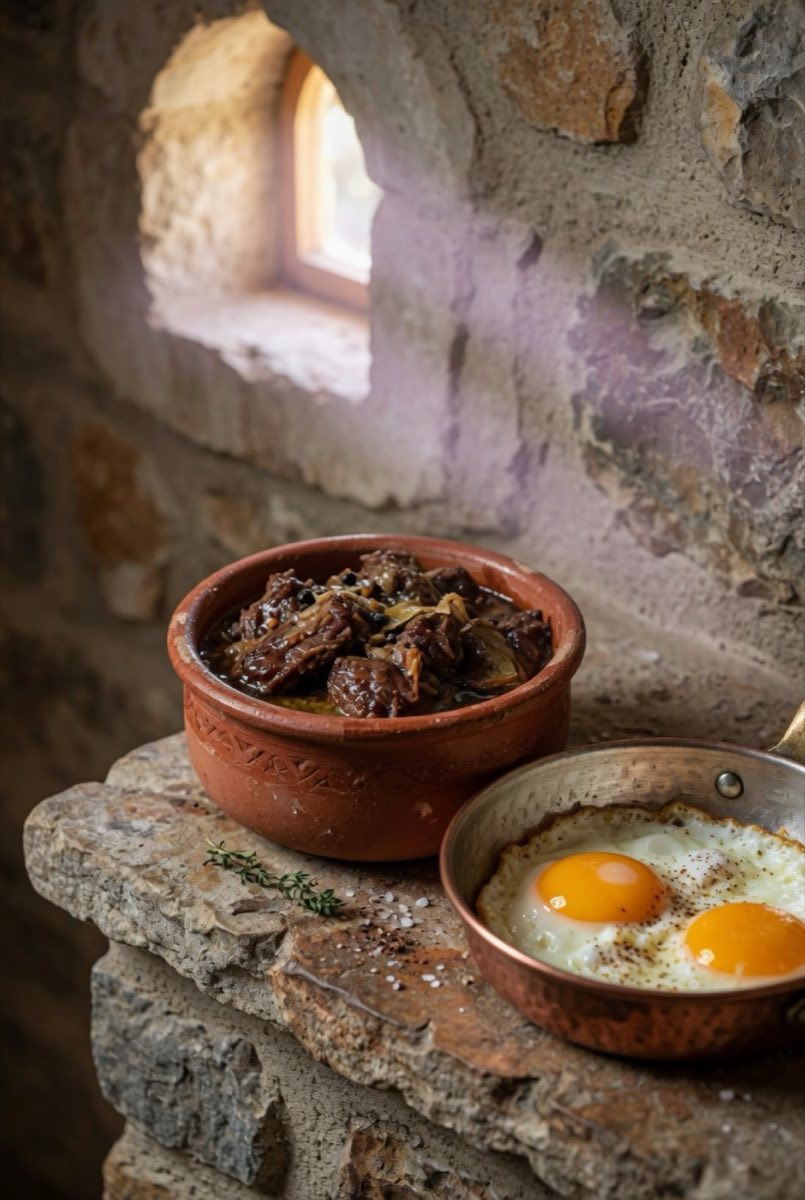
Lamb, minced or cut small, cooked slowly in its own rendered fat with salt until every trace of moisture is gone, then packed into jars and sealed under a layer of that fat. A confit, made in autumn, eaten all winter.
Also known as qawarma · kawarma · قاورمة · awarmeh
- Arabicعوارمةawarma
- What it isLamb slow-cooked and sealed under its own rendered fat
- Looks likePale fat with darker meat suspended in it, set solid when cold
- Made inLate autumn, after the November slaughter
- KeepsMonths in a cool place, sealed under the fat
The Ingredient Atlas, in your pocket
Every Sofra recipe is free to read here on the web. The app carries an Ingredient Atlas covering dozens of Levantine ingredients — in English, Arabic and Portuguese, with the name in French and Spanish too — alongside a free collection of 112 recipes to cook from.
Get Sofra — free download →On the
App Store and Google Play. Zero third-party ads. Ever.
How to buy and store it
Lebanese and Syrian grocers sometimes carry it in jars, particularly in autumn and winter. It is a homemade preserve first and a shop item second, so availability is patchy outside areas with a large Levantine community.
Keep it sealed and cool. The layer of fat on top is the seal — as long as the meat stays under it, awarma keeps for months. Once you break the surface, use a clean dry spoon each time and keep it refrigerated.
The story
Before refrigeration, mountain families across Lebanon and northern Syria preserved the autumn lamb this way. The animal was slaughtered in late October or November, cooked slowly in its own fat for four or five hours, then packed into clay jars, sealed under rendered fat and stored in a cool cellar. By December it had deepened; by February it was at its best. In Idlib, breakfast on a winter morning was eggs cracked straight into the awarma as it rendered in the pan.
Frequently asked questions
What is awarma?
Awarma is lamb slow-cooked in its own rendered fat with salt until all the moisture is gone, then packed into jars and sealed under that fat. It is a preserve made in autumn and eaten through the winter.
Is awarma the same as qawarma?
Yes — the two are the same word transliterated differently, and both spellings are in use. In Arabic it appears as عوارمة and as قاورمة depending on the region.
What does awarma taste like?
Deeply savoury and salty, with the concentrated flavour of long-cooked meat. The rendered fat carries as much of the taste as the meat, so a small amount seasons a whole dish.
How is awarma used?
As a seasoning more than a main protein. Eggs fried in it, stirred into kishk soup, spooned over hummus, or used to start a rice or bulgur dish.
How long does awarma keep?
Months, as long as the meat stays sealed under its layer of fat in a cool place. Once opened, refrigerate it and always use a clean, dry spoon.
What can I use instead of awarma?
Lamb mince browned hard in its own fat and seasoned with salt and a little seven-spice is the usual workaround. Pancetta or bacon lardons fill the same role in a dish from a different tradition.