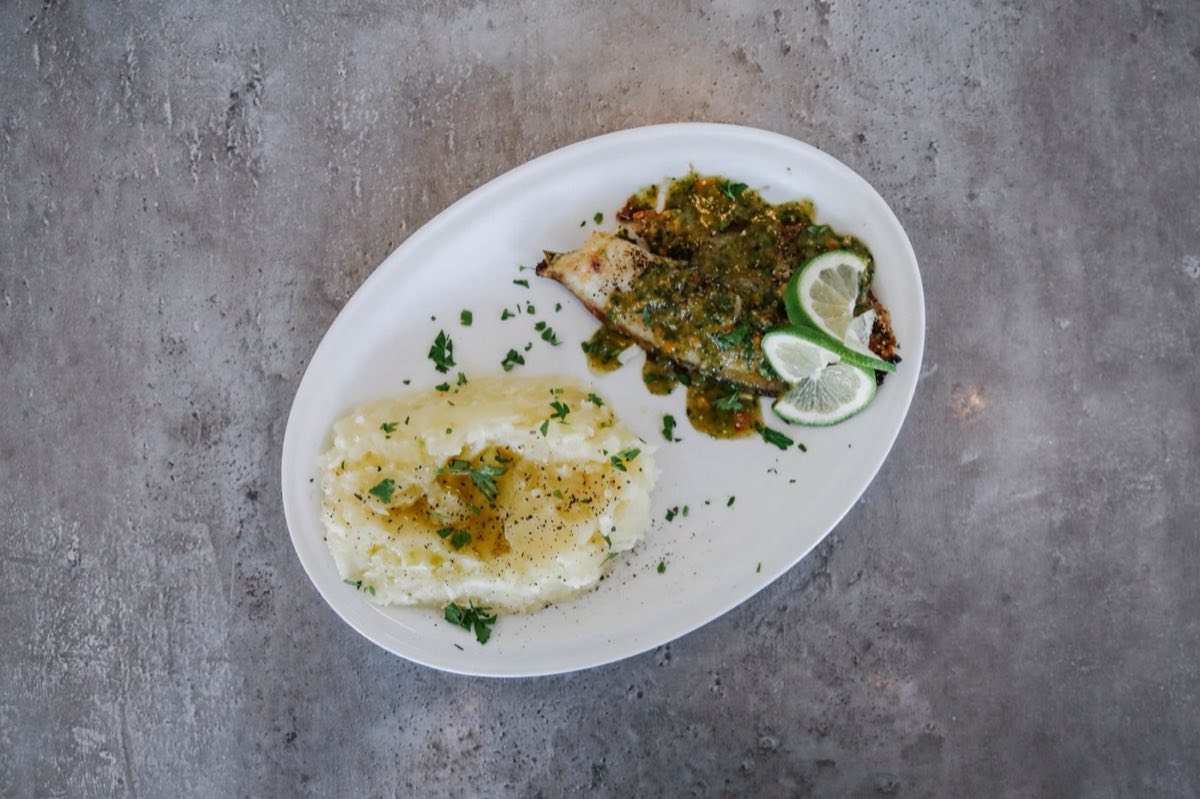
The workhorse of the Lebanese coast — less glamorous than danis or braq, and far more deeply embedded in everyday coastal cooking. Firm, slightly oily flesh that takes hard seasoning. And its roe, salted and pressed, is one of the great delicacies of the Mediterranean.
Also known as bouri · boury · grey mullet · flathead mullet
- Arabicبوريbouri
- Arabic nameبوري — bouri
- EnglishGrey mullet
- Scientific nameMugil cephalus
- Not to be confused withSultan Ibrahim (red mullet) — a different fish entirely
- The roeبطارخ — bitarikh, salted and pressed; bottarga
The Ingredient Atlas, in your pocket
Every Sofra recipe is free to read here on the web. The app carries an Ingredient Atlas covering Bouri and dozens more Levantine ingredients — in English, Arabic and Portuguese, with the name in French and Spanish too — alongside a free collection of 112 recipes to cook from.
Get Sofra — free download →What it tastes and smells like
Stronger and earthier than the white fish of the same coast, with flesh firm enough to take garlic, cumin and a great deal of lemon without disappearing under them. Bouri is not a delicate fish and it is not trying to be; seasoned timidly it tastes muddy, seasoned properly it is superb.
The roe is a separate food altogether. Salted, pressed and dried into a hard amber block, it is shaved or grated over bread with olive oil, or over pasta. A little is a lot.
Bouri is grey mullet. Sultan Ibrahim — barbounia, red mullet — is a different fish. The names are commonly muddled in English writing and the two do not substitute for each other.
What it is used in
- South Lebanese Grilled Fish with Herb SauceSouth Lebanon · Levantine
- Samak bil Forn — Oven-Baked Fish with Onion and TomatoLebanese coast · Levantine
- Samke HarraLebanese coast · Levantine
- SayadiehLebanese coast · Levantine
How to buy and store it
Look for the same signs as any whole fish: clear domed eyes, red gills, firm flesh, clean sea smell. Bouri is a bottom-feeder and its reputation suffers for it — the fix is provenance, not seasoning. Fish from clean water is excellent; fish from a harbour is not, and no amount of garlic rescues it.
The roe is sold as bottarga in Italian delicatessens, as poutargue in France, and as bitarikh in Levantine grocers. It keeps for months wrapped tight in the refrigerator and it is expensive everywhere.
If you cannot find it
- Striped mullet perfectThe same genus, and often the same fish under a different market name.
- Mackerel goodComparably oily and firm, and it stands up to the same aggressive seasoning.
- Bluefish acceptableOilier and stronger. Works where the recipe leans on lemon and spice.
Frequently asked questions
What is bouri fish?
Bouri is the Lebanese name for grey mullet, Mugil cephalus — a firm, slightly oily fish that is one of the most commonly eaten on the Lebanese coast. It is usually grilled or baked with garlic, cumin and lemon.
Is bouri the same as sultan ibrahim?
No. Bouri is grey mullet; sultan ibrahim, also called barbounia, is red mullet. They are different fish with different flavour and texture, and English writing muddles them often. They are not substitutes.
What is bitarikh?
Bitarikh is the salted, pressed and dried roe of the bouri. It is the same product Italians call bottarga and the French poutargue, and it is shaved over bread with olive oil or grated over pasta.
What does bouri taste like?
Stronger and earthier than sea bream or sea bass, with firm, slightly oily flesh. It needs assertive seasoning — garlic, cumin and plenty of lemon — and rewards it.
What can I use instead of bouri?
Striped mullet is the same genus and often the same fish under another name. Mackerel is the best widely available stand-in, being similarly oily and firm.
Why does some bouri taste muddy?
Because it is a bottom-feeder and takes on the character of the water it came from. Fish from clean water is excellent; fish from a harbour is not, and seasoning cannot fix it.