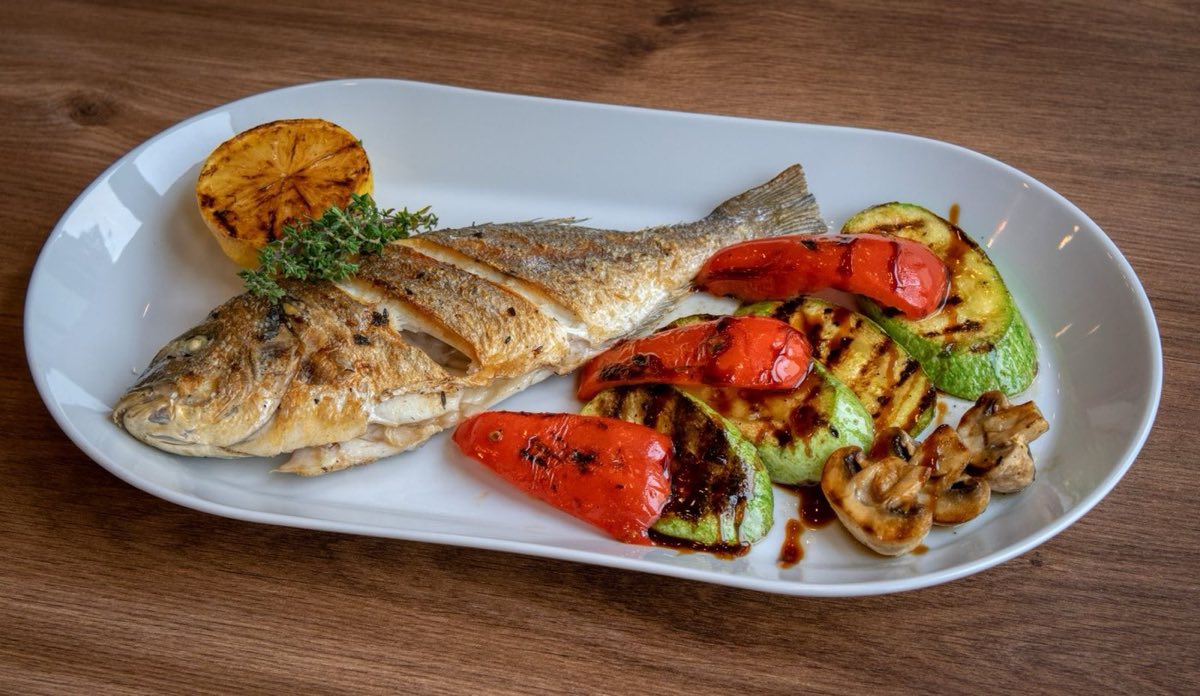
The everyday fish of the Lebanese coast, and the one most often grilled whole over charcoal. Firm white flesh, delicate flavour, silver skin with a gold band between the eyes that gives the fish its English name.
Also known as dorade · orata · gilthead sea bream · denis
- Arabicدنيسdanis
- Arabic nameدنيس — danis
- EnglishGilthead sea bream
- Ask for it asDorade in the US and France; orata in Italy
- Scientific nameSparus aurata
- CookedWhole — grilled over charcoal, or baked in olive oil
The Ingredient Atlas, in your pocket
Every Sofra recipe is free to read here on the web. The app carries an Ingredient Atlas covering Danis and dozens more Levantine ingredients — in English, Arabic and Portuguese, with the name in French and Spanish too — alongside a free collection of 112 recipes to cook from.
Get Sofra — free download →What it tastes and smells like
Clean and delicate, firm enough to hold together on a grill, and not oily. It is the fish you serve to someone who says they do not like fish, and it is also the one a Lebanese cook will choose when the fish itself is meant to be the point.
It is presented whole, head included. The skin crisps, and the cheeks — two small pieces behind the eye — are the part people at the table quietly compete for.
What it is used in
- Grilled Danis — Sea Bream in the Tyrian StyleLebanese coast · Levantine
- Samak bil Forn — Oven-Baked Fish with Onion and TomatoLebanese coast · Levantine
- Whole Baked Fish in Tahini SauceLebanese coast · Levantine
- SayadiehLebanese coast · Levantine
How to buy and store it
Buy it whole, not filleted. The skin is half of what you are cooking and the head keeps the flesh moist; a fillet of danis is a different and lesser dish. Judge freshness the way a fishmonger expects you to: clear convex eyes, red gills, firm flesh that springs back, and a smell of clean seawater rather than of fish.
Outside Lebanon, ask for dorade — that is the name most US and French fishmongers use, and it is now widely farmed in the Mediterranean so it is available year round. Italian markets sell it as orata. Score the skin two or three times on each side before grilling; Lebanese cooks do it without thinking and it stops the fish curling.
If you cannot find it
- Branzino, also called braq or laqqos perfectThe other whole white fish of the same coast. Interchangeable in every Lebanese preparation.
- Porgy or scup goodSame family, widely available in the US, usually cheaper.
- Red snapper acceptableFirmer and stronger flavoured. Works, but it stops tasting like the same dish.
Frequently asked questions
What is danis fish?
Danis is the Lebanese name for gilthead sea bream, Sparus aurata — a firm, delicate white fish from the eastern Mediterranean, usually grilled or baked whole. It is sold as dorade in the United States and France and as orata in Italy.
What is danis called in English?
Gilthead sea bream. At a fish counter you are far more likely to find it labelled dorade, or orata in an Italian market. All three are the same fish.
What can I use instead of danis?
Branzino — the fish Lebanese cooks call braq or laqqos — is a direct swap. Porgy and scup are the same family and easier to find in the United States.
How do I know if danis is fresh?
Clear, slightly domed eyes; red gills, not brown; flesh that springs back when pressed; and a smell of clean seawater. A flat, cloudy eye is the first thing to go.
Should I buy danis whole or filleted?
Whole. The skin crisps on the grill and the bones and head keep the flesh moist. Lebanese preparations assume a whole fish and the cheeks are considered the best part.
How is danis cooked in Lebanon?
Most often grilled whole over charcoal with garlic and lemon, or baked in olive oil with onion and tomato. It also goes into sayadieh, the rice-and-fish dish of the coast.