The story
IdlibIdlib has its own za'atar tradition, and the wild thyme of Jabal al-Zawiya is commonly described as unusually pungent — a difference attributed locally to the limestone soils and the dry mountain climate.
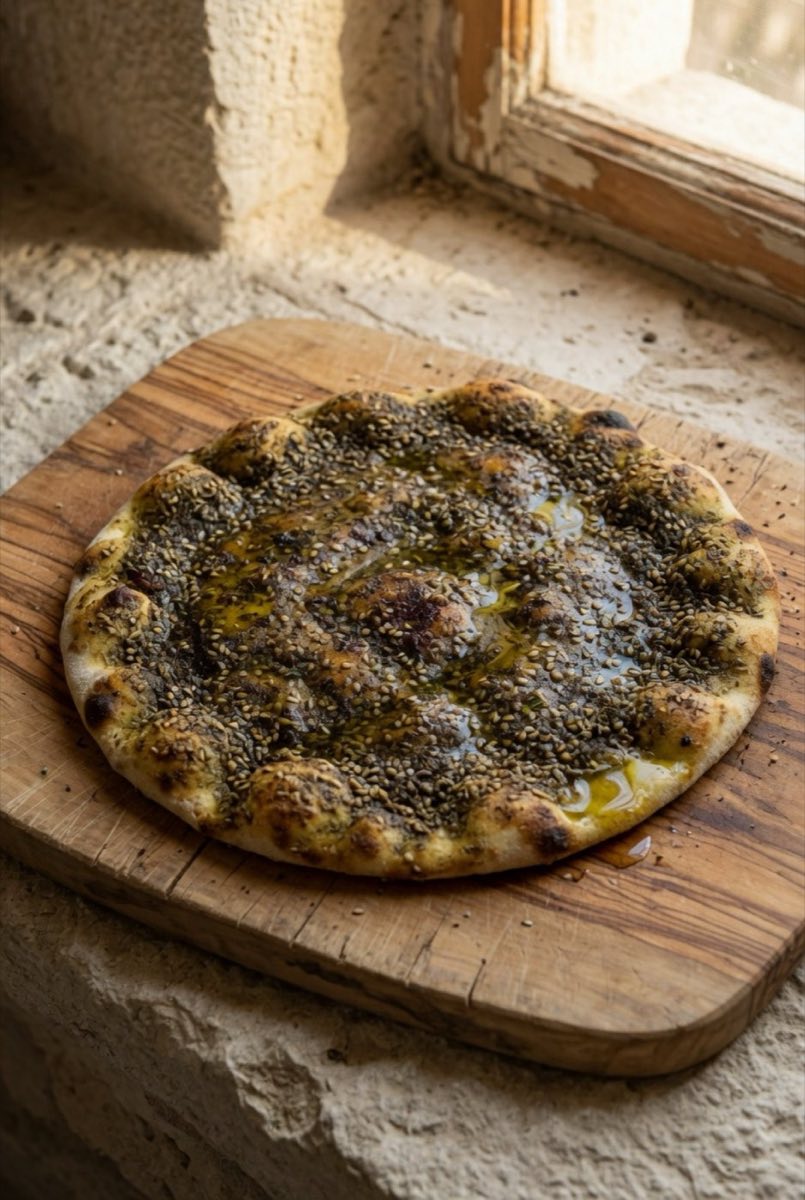
Two things share this name. Za'atar is a wild thyme that grows across the Levant, and za'atar is also the blend built on it — the dried herb with sumac, toasted sesame and salt. The blend is what you dip bread and olive oil into.
Also known as zaatar · za'tar · zahtar · zatar
Every Sofra recipe is free to read here on the web. The app carries an Ingredient Atlas covering Za'atar and dozens more Levantine ingredients — in English, Arabic and Portuguese, with the name in French and Spanish too — alongside a free collection of 112 recipes to cook from.
Get Sofra — free download →The herb is thyme with more oregano in it than English thyme has — resinous, dry, a little peppery. The blend adds sour from the sumac and fat from the sesame, which is why it works with olive oil and would not work with butter.
Regional blends differ, and the difference is easy to taste side by side. Lebanese blends tend to be thyme-forward and mild with the sumac; Syrian and Palestinian blends often run more oregano-like or more sour.
Cheaper blends are bulked out with flour, bran or citric acid. Check the ingredient list.
20 Sofra recipes use it in all — browse the collection.
Middle Eastern grocers usually carry several blends at once; buy small quantities of two and taste them against each other before committing. A good blend smells green and sharp through the bag. A dull, dusty, hay-like smell means it has been sitting.
The sesame is what fails first. Keep the blend sealed, cool and dark, and smell it before using an old bag — rancid sesame is unmistakable and will carry through everything you put it on.
Both, and the name is used for each. Za'atar is a wild thyme native to the Levant, and it is also the name of the blend made from that dried herb with sumac, sesame seeds and salt.
The herb is thyme with a strong oregano character — resinous, dry, slightly peppery. The blend adds sourness from sumac and richness from sesame.
Dried thyme, sumac and toasted sesame seeds at roughly two to one to one, with salt. It is a genuine approximation rather than a compromise, provided the sesame is toasted.
Because the proportions and the herb itself vary by region and by family. Lebanese blends tend to be thyme-forward with restrained sumac; Syrian and Palestinian blends are often more oregano-like or more sour.
Smell it. The sesame in the blend turns rancid before anything else does, and once it has, it carries through everything you put the blend on.
Most famously with olive oil as a dip for bread, and baked onto flatbread as manakish. It also goes onto labneh, into salads and dough, and with eggs.