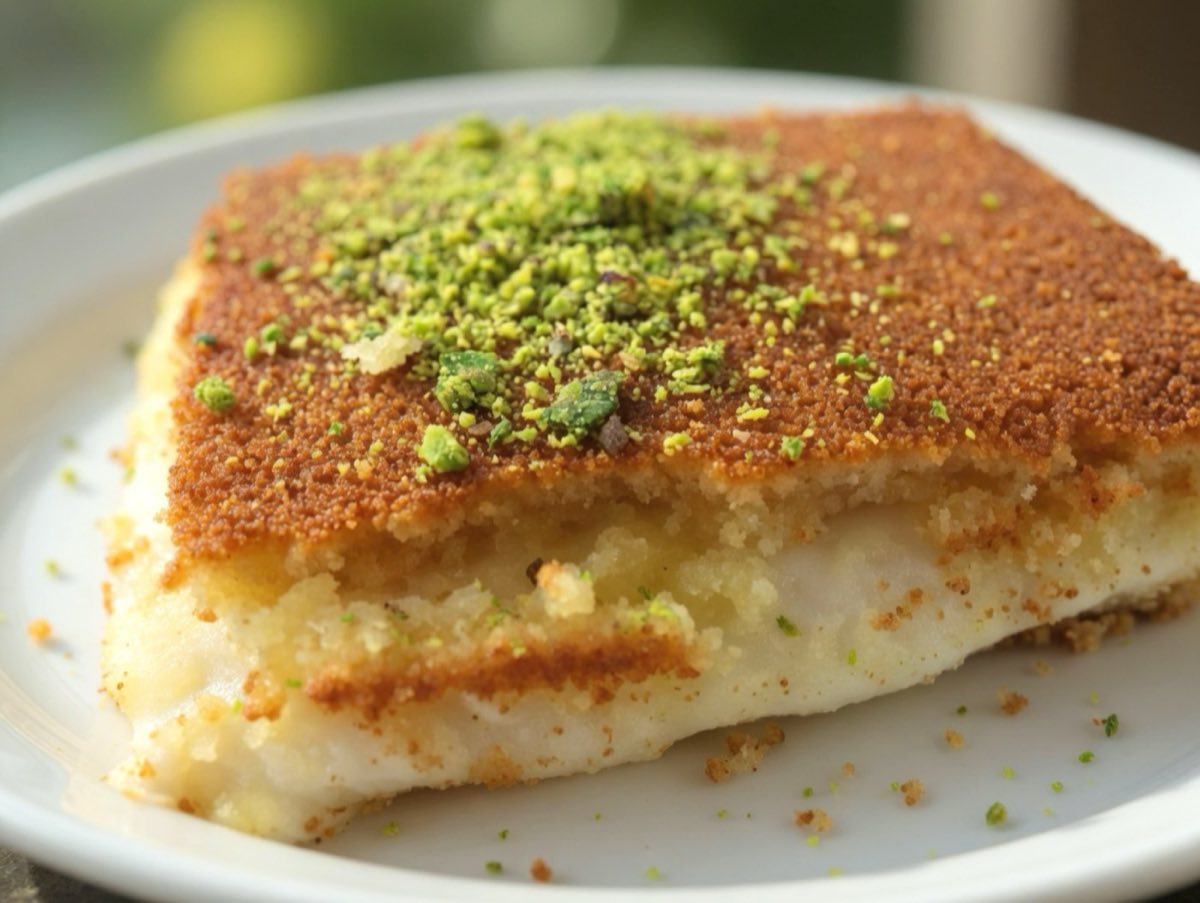
A smooth white brine cheese, named after the city of Akka — Acre. Mild, springy and salty, with no holes. It is on the breakfast table, it is the cheese inside knafeh, and in summer it is eaten in slices against cold watermelon.
Also known as akawi · acawi · ackawi · jibneh akkawi
- Arabicجبنة عكاويjibneh 'akkawi
- Arabic nameجبنة عكاوي — jibneh 'akkawi
- Named afterAkka (Acre)
- What it isCow's-milk white brine cheese; sheep's milk in village production
- TextureSemi-firm, springy, no holes
- KeepsWeeks in its brine, refrigerated
The Ingredient Atlas, in your pocket
Every Sofra recipe is free to read here on the web. The app carries an Ingredient Atlas covering Akkawi and dozens more Levantine ingredients — in English, Arabic and Portuguese, with the name in French and Spanish too — alongside a free collection of 112 recipes to cook from.
Get Sofra — free download →What it tastes and smells like
Mild and milky with a clean salt edge — it is a texture cheese before it is a flavour cheese, which is exactly why it works in a dessert. Fresh akkawi squeaks slightly against the teeth.
The salt is a preservative, not a seasoning decision, and how much you remove depends entirely on what you are making. For knafeh the cheese should end up close to unsalted; its job there is stretch and mild creaminess, and salt left in will fight the syrup.
Which kind
- Fresh akkawiWetter and softer. The one to buy for knafeh.
- Aged akkawiFirmer and considerably saltier. For slicing and eating as it is.
What it is used in
- KnafehLebanese coast · Levantine
- Cheese FatayerMount Lebanon · Levantine
- Man'ousheh bil JibnehMount Lebanon · Levantine
- Ma'amoul bil JbnehLebanese coast · Levantine
- Kaak bi SimsimLebanese coast · Levantine
- Halawet el-Jibn400 g Akawi cheese (or fresh mozzarella)
- Rakakat bil Jibn300 g akkawi cheese or halloumi, grated
- SambousekMount Lebanon · Levantine
How to buy and store it
Lebanese and Palestinian grocers keep it in brine; mainstream supermarkets rarely carry it at all. Buy it sitting in liquid rather than shrink-wrapped dry, and ask which of the two kinds you are being sold — the difference matters more than the brand does.
Desalting is a step, not an option. Slice the cheese, cover it with cold water, and change the water two or three times over about two hours, tasting as you go. For knafeh keep going until it tastes almost of nothing. For eating with watermelon, stop early — the salt against the sweetness is the entire point of that pairing.
If you cannot find it
- Low-moisture fresh mozzarella goodFor knafeh above all: the same mild creaminess and a comparable melt.
- Ricotta salata acceptableMuch saltier and drier. Desalt it hard before using.
Frequently asked questions
What is akkawi cheese?
Akkawi is a smooth white brine cheese from the Levant, named after the city of Akka (Acre). It is mild, semi-firm and salty, made from cow's milk — traditionally sheep's milk in village production.
How do you desalt akkawi?
Slice it, cover it with cold water, and change the water two or three times over roughly two hours, tasting as you go. For knafeh keep going until it is almost unsalted; for eating plain, stop while some salt remains.
Which akkawi do I buy for knafeh?
The fresh kind — wetter and softer than the aged one, and it melts and stretches better. Then desalt it thoroughly, because its role in knafeh is texture rather than flavour.
What can I use instead of akkawi?
Low-moisture fresh mozzarella is the closest easy substitute, especially in knafeh. Ricotta salata works if you desalt it aggressively first.
Why is akkawi eaten with watermelon?
Because the salt and the sweetness work on each other. Cold watermelon with slices of salty white cheese is a summer ritual across Lebanon, and it is one of the few uses where you want the salt left in.
Where do I buy akkawi?
Lebanese, Palestinian and wider Middle Eastern grocers, kept in brine. It is not commonly stocked by mainstream supermarkets.