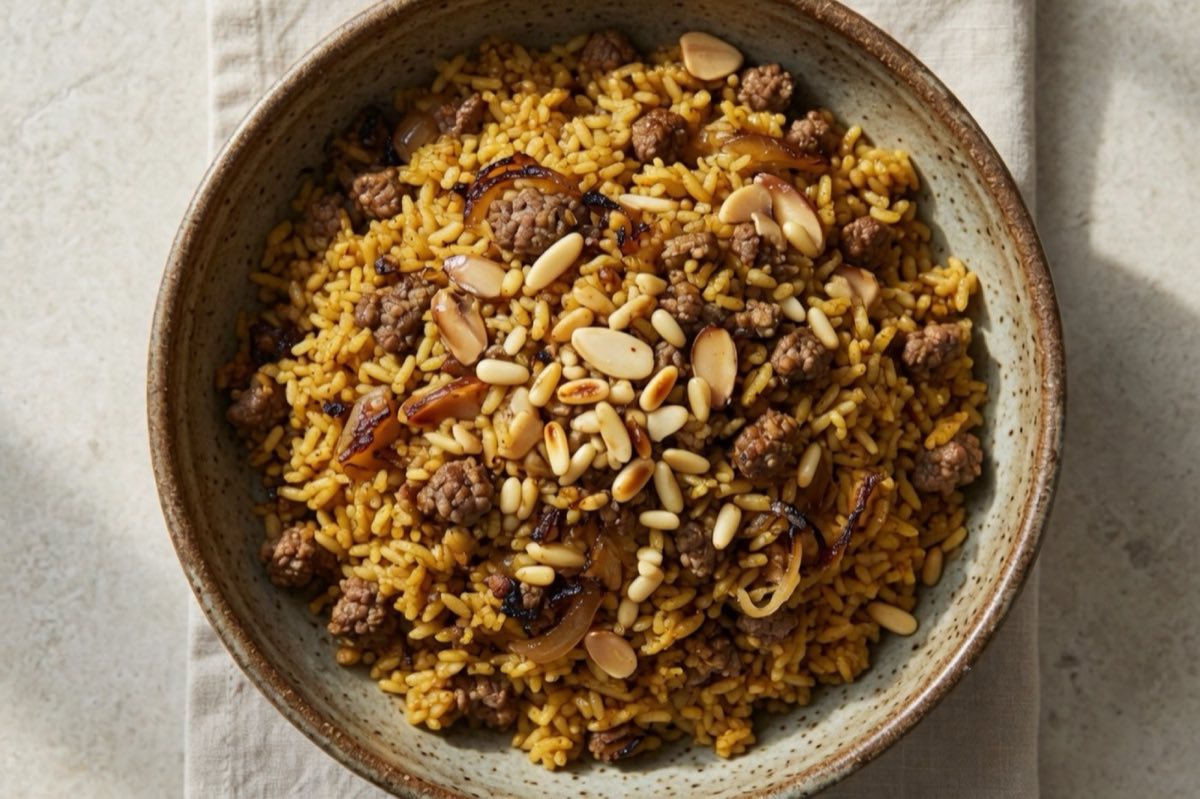
Butter with the milk solids cooked out — high-smoking, nutty, and the fat that browns vermicelli, toasts pine nuts and finishes a tray of rice. Levantine samneh is commonly churned from yogurt rather than cream, which leaves a faint tang.
Also known as samna · samn · ghee · clarified butter
- Arabicسمنsamneh
- What it isButter with the milk solids and water removed
- Looks likeGrainy golden solid at room temperature, clear when melted
- Why use itHigh smoke point, nutty flavour, keeps without refrigeration
- KeepsMonths sealed at room temperature; longer refrigerated
The Ingredient Atlas, in your pocket
Every Sofra recipe is free to read here on the web. The app carries an Ingredient Atlas covering Samneh and dozens more Levantine ingredients — in English, Arabic and Portuguese, with the name in French and Spanish too — alongside a free collection of 112 recipes to cook from.
Get Sofra — free download →What it tastes and smells like
Nutty and toasted, deeper than butter because the milk solids have browned before being strained out. Levantine samneh made from yogurt-churned butter carries a faint sourness that Indian ghee does not.
That difference is small on the spoon and noticeable in a dish. It is why rice finished with samneh tastes like something and rice finished with neutral oil tastes like rice.
What it is used in
- Baklava200 g Unsalted butter (clarified or ghee)
- Daoud Basha3 tbsp ghee
- Djaj bil Freekeh — Chicken with Roasted Green Wheat40 g ghee or clarified butter
- Idlib Layered Chickpea and Yogurt Fatteh3 tbsp clarified butter (ghee)
- Harissa — Lebanese Wheat and Lamb Porridge80 g clarified butter (samn)
- Hashweh3 tbsp ghee
- Ka'ak el Eid200 g, melted Clarified butter (samneh)
- Idlib Feast Lamb with Sour Cherries and Pomegranate3 tbsp clarified butter
27 Sofra recipes use it in all — browse the collection.
How to buy and store it
Middle Eastern grocers stock Lebanese and Syrian samneh specifically — worth asking for by name rather than settling for whatever ghee is on the shelf. Indian ghee is the same technique and is a perfectly good substitute; it is simply made from cream rather than from yogurt-churned butter.
It does not need refrigerating: with the water and milk solids gone there is very little left to spoil. Keep the jar sealed and out of direct light, and use a dry spoon — water is what turns a jar of samneh.
If you cannot find it
- Indian ghee goodThe same technique from a different tradition. Made from cream rather than yogurt-churned butter, so it lacks the faint tang.
- Unsalted butter goodClose enough in flavour for most uses. Lower smoke point, so watch the heat.
- Olive oil acceptableWorks in most savoury dishes and changes the character of all of them.
Frequently asked questions
What is samneh?
Samneh is clarified butter — butter cooked until the water evaporates and the milk solids can be strained out. In the Levant it is commonly made from yogurt-churned butter, which leaves a faint tang.
Is samneh the same as ghee?
The technique is the same. The difference is the starting butter: Levantine samneh is commonly churned from yogurt, Indian ghee from cream. Ghee is a good substitute; it simply lacks the sourness.
Why use samneh instead of butter?
Because the milk solids are gone, it has a much higher smoke point and will not burn where butter would. It also keeps for months without refrigeration.
Does samneh need to be refrigerated?
No. With the water and milk solids removed there is little left to spoil. Keep it sealed, out of the light, and always use a dry spoon.
What can I use instead of samneh?
Ghee first, then unsalted butter if you keep the heat moderate. Olive oil works in savoury dishes but changes the character of the result.
What is samneh used for?
Browning vermicelli for rice, toasting pine nuts, enriching stews, and finishing rice dishes and pastries.